Hard Coated Glass for Special Insulating Glass Units
Hard coated glass for insulating glass manufacturers
This offer is intended for glass processors, insulating glass manufacturers and window companies evaluating thin glass with a hard functional coating. The available material is conductive FTO glass with a nominal thickness of 2.1 mm and a sheet size of 2000 x 1400 mm. It provides a starting point for project development, sample production and procurement of suitable glass blanks.
Customers looking for hard coat low emissivity glass can submit their specification for comparison with the available material. This is a defined FTO product, not an unspecified substitute for every architectural glass grade. The purchasing discussion begins with the intended construction, processing route and acceptance criteria.
Coating identity and product terminology
FTO means fluorine doped tin oxide, expressed as SnO2:F. It belongs to the transparent conductive oxide family, or TCO. CVD describes the chemical vapour deposition process used for the supplied hard coating. Low emissivity describes thermal behaviour rather than a unique chemical composition. These terms support material selection but should not be treated as interchangeable specifications.
Available sheet characteristics
- Nominal substrate thickness: 2.1 mm.
- Sheet dimensions: 2000 x 1400 mm.
- Coating: hard conductive FTO deposited by CVD.
- Reported sheet resistance: approximately 30 ohms per square.
- Reported light transmission: 85 percent from a production measurement.
The electrical and optical figures support preliminary selection. Defined tolerances and acceptance limits require confirmation for the order. Electrical resistance does not establish an emissivity value, and light transmission alone does not determine the thermal performance of an insulating glass unit.
Supply forms and prepared blanks
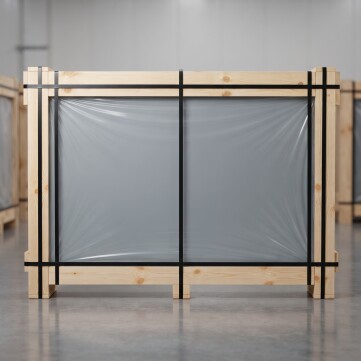
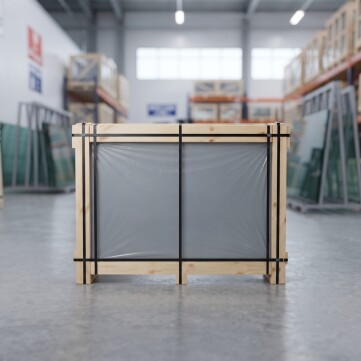
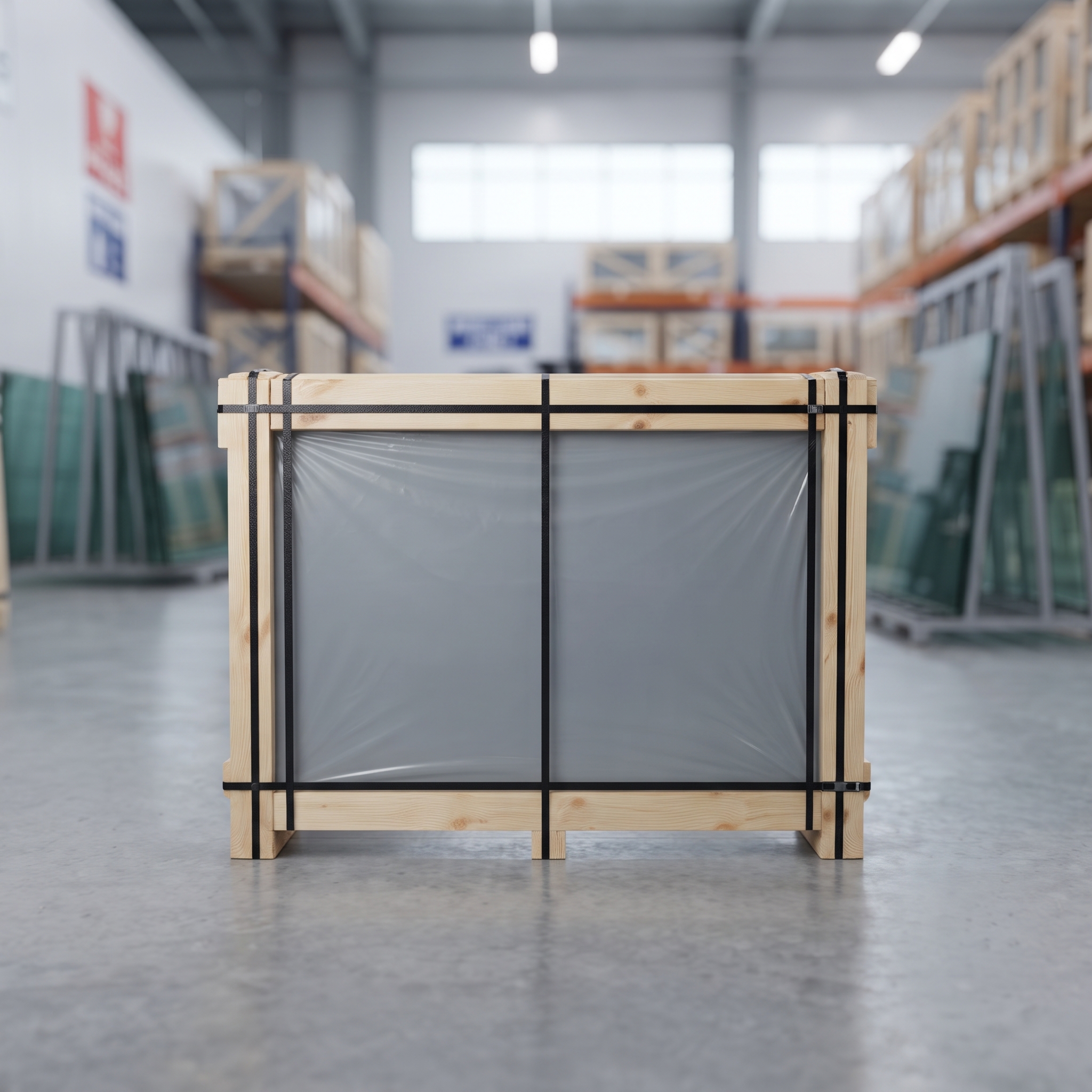
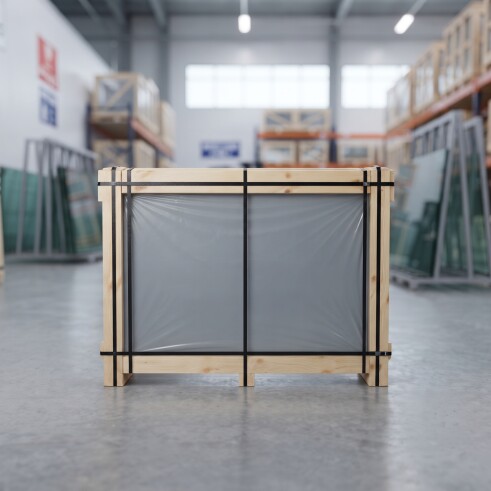
Requests can cover full sheets, case quantities or blanks prepared to agreed dimensions. Wooden transport packaging is used for the sheet material. Cutting and edge grinding can be included by agreement. The component schedule should state quantities, dimensions and edge requirements so that the proposed supply reflects the work actually needed by the receiving production line.
Standards and project documentation
Projects may specify optical properties using ISO 9050 and thermal transmittance calculations using EN 673 where applicable. These documents describe assessment methods; their mention does not certify this batch. Product approval must follow the requirements of the destination market and the completed construction. Available batch documents and any additional testing should be reviewed before production purchasing.
The thin substrate should be considered as part of the complete manufacturing concept. It may be assessed as an individual component or within a designed multilayer assembly, but neither route is assumed to be approved in advance. The purchaser should identify who performs the structural review and who accepts the finished product. Clear allocation of these responsibilities makes discussions between the material supplier, processor and window company more efficient and reduces avoidable specification changes.
Functional role in glazing
A hard coating adds a functional surface to a glass substrate. Conductive FTO can act as an electrode and, with a suitable electrical design, as part of a transparent heating assembly. Low emissivity coatings perform a different function by reducing radiative heat exchange. Some oxide coated products combine these functions, but the thermal properties of this material need separate confirmation for an energy performance specification.
Applications for glass processors and window companies
Potential enquiries include special insulating glass constructions, electrically heated glazing, equipment windows and functional laminated assemblies. Window companies can submit a project specification even when fabrication will be performed by a separate processor. The required construction, responsible manufacturer and acceptance procedure should be identified early. A supplied sheet is a component rather than a finished, approved window or facade assembly.
Comparison with alternative coated glass
Hard pyrolytic coatings and soft sputtered coatings have different processing requirements. Silver based architectural coatings may be specified for particular thermal and solar control performance. Conductive FTO should be compared against the functions actually required, not offered as an automatic replacement. Where electrical operation is unnecessary, the architectural specification remains the primary selection basis. Where electrical operation matters, resistance and contact design also become important.
Processing mistakes to avoid
- Replacing a specified glass thickness without reviewing structural requirements.
- Transferring heat treatment settings from a different coated product.
- Assuming edge deletion is either always necessary or always unnecessary.
- Allowing abrasive contamination or metal tools to contact the coating.
- Assigning a thermal transmittance value without assessing the complete unit.
- Ordering a production quantity before checking a new fabrication route.
Quality checks before production
Useful checks include dimensions, thickness, edge condition, visible surface quality, transmission and sheet resistance. Projects concerned with energy performance additionally need the relevant emissivity data and glazing assessment. Batch measurements are provided through available quality documentation. Sampling positions, inspection quantities and additional tests should be agreed where the standard documentation does not address the requirements of the purchaser.
Storage and transport preparation
Store the packaged material in a dry, protected area and prevent contact with abrasive particles. Support, orientation and lifting arrangements should follow the packaging instructions for the consignment. Confirm access for unloading and equipment suitable for the package weight. Inspect packaging at receipt and document visible damage before processing. Specific storage limits should follow the applicable product instructions rather than assumptions about ordinary glass.
Assessing replacement and compatibility
For replacement projects, provide the original specification, dimensions, thickness, coating function and intended unit construction. Comparison should cover thermal performance, transparency, appearance, processing and safety. Matching a product name is insufficient. If some original data are unavailable, the review should identify what can be checked and what remains unresolved before a substitution is accepted.
Supply planning for worldwide projects
Worldwide enquiries can address evaluation material, prepared blanks and larger purchasing requirements. Availability, preparation time and the actual supply scope are confirmed for each project. A preliminary demand forecast helps distinguish an initial trial from recurring production. Commitments on future volumes, processing capacity and dispatch dates are established through the agreed offer rather than assumed from a general product description.
Freight and customs arrangements
Transport can be reviewed using road, rail, sea or multimodal options where applicable. The agreed arrangement should define packaging, loading, unloading and responsibility for each stage. Freight coordination, customs brokerage and financial arrangements are discussed separately when required. They are not automatically included in a supply of sheets or prepared blanks. The commercial terms must reflect the actual shipment.
Purchasing economics for glass processors
A useful comparison considers the cost of a usable component rather than sheet price alone. Relevant factors include cutting layout, processing, packaging, transport and acceptance work. An initial trial can establish whether the material fits the production route before a larger commitment. Comparing full sheet supply with prepared blanks can help a purchaser choose the appropriate division of processing responsibilities.
Frequently asked questions
Is this the same as every hard coat low emissivity product?
No. The supplied material is defined FTO glass. Compatibility with a specified architectural product requires comparison of the relevant properties.
Can it be used in an insulating glass unit?
Potential use must be assessed against the proposed construction, including thickness, thermal requirements, seals, processing and safety obligations.
Does the coating guarantee a particular insulation value?
No unit thermal value is declared here. The required coating data and complete glazing construction must be assessed separately.
Can sheets be cut and edge ground?
These operations are available by agreement. Provide a drawing or dimension schedule with quantities and edge requirements.
Can the glass be strengthened or heat treated?
The intended process must be reviewed for this material. A trial is appropriate before using an unverified cycle for the complete order.
What information supports an accurate proposal?
Provide the application, dimensions, quantities, unit construction, processing requirements and relevant optical or thermal acceptance criteria.
Summary for production purchasing
This offer focuses on thin hard coated FTO glass and its evaluation within specific glazing projects. Defined sheet dimensions, preparation options and a clear acceptance specification support a practical purchasing decision. The material should be selected through its suitability for the intended product, not through an assumed equivalence between different coating names.
Contact Us
info@apptrade.ru