Metalworking Fluids
Metalworking Fluids: Technical Overview for Industrial Applications
Metalworking fluids (MWF) are multicomponent liquid systems designed to lubricate and cool the tool and workpiece in the metal cutting zone. In industrial practice, MWF occupy a central position among machining process media. Their primary function is to simultaneously reduce friction at the tool-chip interface, remove heat, flush chips, and protect the machined surface from corrosion. The correct selection of MWF directly affects tool life, dimensional accuracy, surface finish, and equipment productivity.
Chemical Identification
MWF are not single chemical compounds. They are formulations based on mineral, synthetic, or vegetable oils with a package of functional additives. In international trade, MWF are classified under HS headings 3403, 2710, or 3824 depending on the base and petroleum content. Water-miscible concentrates forming emulsions are typically classified under heading 3403 as metalworking emulsions for cutting tools. Products based on hydrocarbons with a petroleum content above 70 percent may fall under heading 2710. Synthetic formulations without mineral oils may fall under heading 3824. Accurate description of the base and petroleum fraction content is required for customs clearance.
Physicochemical Properties
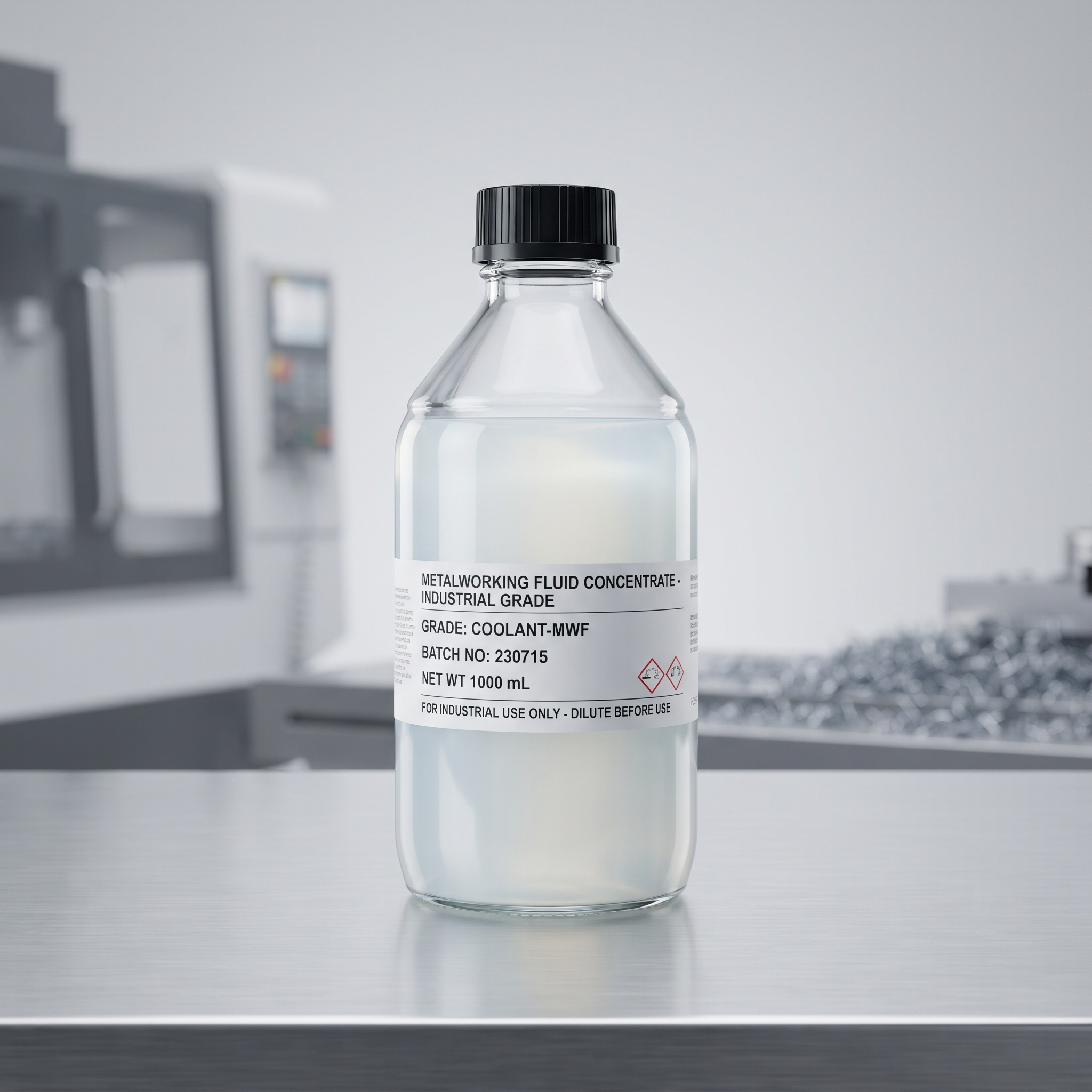
Properties are governed by the base type and additive package. Neat oils are highly refined mineral or synthetic oils with kinematic viscosity at 50 degrees Celsius ranging from 12 to 40 mm2/s and a flash point not below 175 degrees Celsius. Water-miscible concentrates form emulsions or transparent solutions when mixed with water. Working emulsions based on mineral oils appear milky, semi-synthetic fluids are semi-transparent, and synthetic fluids are transparent. The pH of working emulsions for emulsion and semi-synthetic fluids is typically in the range of 8.5 to 9.5; synthetic fluids may be closer to neutral. Concentrate density at 20 degrees Celsius averages from 0.86 to 0.95 g/cm3 depending on type. The flash point of neat oils containing petroleum fractions may be below 60 degrees Celsius, classifying them as flammable liquids for transport.
Technical Grades and Supply Forms
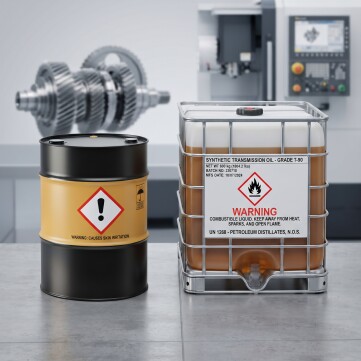
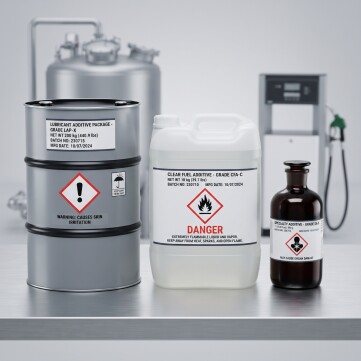
MWF are supplied as ready-to-use neat oils and as concentrates from which working solutions are prepared on site. The range includes neat oils for heavy operations such as broaching, gear cutting, and deep drilling; emulsion concentrates for general machining; semi-synthetic fluids for turning and milling; and synthetic fluids for grinding and aluminum alloy machining. Concentrates are supplied in cans, drums, intermediate bulk containers, and tank containers. Ready-to-use neat oils are supplied in drums and tank cars. Typical bulk shipments start from one tonne.
Regulatory Framework
No single state standard covers all MWF types in the EAEU. A significant part of production is governed by manufacturer technical specifications that set quality indicators, application scope, and test methods. However, MWF as lubricating materials are subject to conformity declaration under TR CU 030/2012 On Requirements for Lubricating Materials, Oils, and Special Fluids. Hazard assessment applies GOST 12.1.007 for hazard class and GOST 32419 for chemical product classification. Test methods for quality indicators are governed by petroleum product standards, in particular GOST 3900 for density, GOST 33 for viscosity, and GOST 4333 for flash point.
Mechanism of Action and Functional Role
MWF performs three interrelated functions. Lubrication is achieved through boundary films formed on friction surfaces, reducing friction coefficient and tool wear. Surfactant and additive molecules penetrate microcracks and create a wedging effect, facilitating plastic deformation. Cooling is provided by heat removal from the cutting zone due to the heat capacity and thermal conductivity of the fluid. Additionally, MWF helps remove chips and abrasive particles, prevents built-up edge formation on the cutting edge, and protects the machined surface from corrosion. The additive package includes emulsifiers, stabilizers, corrosion inhibitors, anti-wear and extreme-pressure components, biocides, and defoamers.
Applications by Industry
The machine-building industry consumes the largest share of MWF for turning, milling, drilling, grinding, broaching, and gear cutting. Neat oils are used at high specific pressures and low speeds, such as gear cutting and deep drilling. Emulsion and semi-synthetic fluids are used for turning and milling of structural and alloy steels. Synthetic fluids are preferred for grinding and aluminum alloy machining, where high surface cleanliness and absence of oil stains are required. In the automotive industry, MWF are used on engine and transmission machining lines. In aerospace, they are used for titanium and nickel alloy machining. In bearing and tool production, they are used for finishing operations.
Comparison with Alternative Materials
Neat oils provide the best lubricating properties due to high oil film strength but are inferior to water-miscible fluids in cooling capacity and require more complex part cleaning. Emulsion fluids offer a good balance of cooling and lubrication but are prone to microbial deterioration and require regular control of concentration and pH. Semi-synthetic formulations combine the advantages of emulsions and synthetics, providing higher stability and lower tendency to form deposits. Synthetic fluids have the best cooling capacity and resistance to microbial deterioration but may be inferior to neat oils and emulsions in lubricating action during heavy operations.
Typical Processing Errors
- Preparing the emulsion by adding water to the concentrate rather than concentrate to water, resulting in an inverted emulsion and loss of performance.
- Lack of regular control of working solution concentration, causing reduced lubricating and anti-corrosion properties.
- Neglecting pH control, especially when it falls below 8, indicating microbial deterioration and corrosion risk.
- Using hard water for emulsion preparation without prior softening, reducing solution stability.
- Storing concentrate at sub-zero temperatures without subsequent mixing after thawing.
- Mixing spent MWF with other chemical waste streams without considering disposal requirements.
Quality Control and Laboratory Methods
Incoming inspection of MWF concentrate includes determination of appearance, density, pH of the aqueous solution, water content, flash point for neat oils, and emulsion stability. During operation, working solution concentration is monitored by refractometric or titrimetric methods, pH by pH meter or indicator strips, microbial deterioration, foreign matter content, and oil film on the surface. For critical operations, corrosive effect on steel and cast iron and lubricating properties on a four-ball tester may be assessed.
Storage and Transportation Conditions
Water-miscible MWF concentrates are stored in sealed containers in heated warehouses at temperatures from plus 5 to plus 35 degrees Celsius, protected from direct sunlight and precipitation. Freezing of concentrate is not recommended, although some products tolerate short-term cooling followed by thawing and mixing. The guaranteed shelf life of concentrates is typically 12 months from the date of manufacture; ready-to-use neat oils may have a longer shelf life. Neat oils with a flash point below 60 degrees Celsius are classified as class 3 dangerous goods and require compliance with flammable liquid transport regulations. Water-miscible concentrates are in most cases not dangerous goods, simplifying logistics.
Finding Analogues and Interchangeability
When selecting an analogue for MWF, the key criteria are base type, lubricant classification class, working concentration, and compatibility with the materials being machined. The fluid being replaced and the new fluid must belong to the same class, for example water-miscible emulsions. Compatibility with seals, paints, and machine tool materials must be considered. Direct substitution without system flushing and preliminary testing is not recommended, because residues of the previous fluid may react with the new one and cause emulsion splitting or corrosion. For operations with high surface quality requirements, comparative testing on the specific equipment is advisable.
Supply Scheme
For industrial buyers, MWF are available worldwide through the apptrade.ru platform. Shipments can be organized from producing regions across different continents, with logistics and customs support adapted to the destination market. International sourcing allows buyers to balance cost and lead time depending on batch size and logistical distance.
Logistics and Customs Clearance
MWF are transported by sea, rail, and road. For large batches of concentrates, sea tank containers or intermediate bulk containers are economically viable; for medium and small volumes, drums and cans are used. When imported into the EAEU, products are classified under HS headings 3403, 2710, or 3824 depending on the base and petroleum content. For codes in group 3403, a conformity declaration under TR CU 030/2012 is required. Neat oils with a flash point below 60 degrees Celsius may be classified as class 3 dangerous goods with UN number 1993, requiring special packaging and marking. The portal customs broker prepares declarations, confirms classification codes, and manages non-tariff regulation procedures.
FAQ
What is the difference between neat oil and water-miscible MWF?
Neat oil is supplied ready-to-use and provides high lubricating properties but inferior cooling. Water-miscible MWF is supplied as a concentrate from which a working emulsion or solution is prepared on site; it provides better cooling and is more economical per working volume.
How should a working emulsion be prepared from concentrate?
Concentrate is added to water, not the other way around, with continuous mixing. Adding water to concentrate produces an inverted emulsion and loss of properties. Water of known hardness should be used, softened if necessary.
What pH is considered normal for a working emulsion?
For emulsion and semi-synthetic MWF, the optimal pH range is 8.5 to 9.5. A drop below 8 indicates microbial growth and corrosion risk; a rise above 9.5 may cause skin irritation.
Is conformity declaration required for MWF?
Yes, MWF as lubricating materials are subject to conformity declaration under TR CU 030/2012. For products classified under heading 3403, a declaration is mandatory.
How long can MWF concentrate be stored?
The guaranteed shelf life of concentrates is typically 12 months from the date of manufacture at temperatures from plus 5 to plus 35 degrees Celsius in sealed containers. After expiry, the product must undergo laboratory testing before use.
Can different MWF brands be mixed?
Mixing different brands is not recommended without prior compatibility testing. Residues of the previous fluid in the system may react with the new one and cause emulsion splitting, sediment formation, or corrosion. When switching brands, the system should be flushed and control tests performed.
Conclusion
Metalworking fluids remain a critical element of machining production, affecting tool life, surface quality, and equipment productivity. For industrial buyers, important factors include not only fluid type and concentration but also batch-to-batch quality consistency, correct customs classification, and compliance with storage conditions. The apptrade.ru portal organizes the full supply cycle, from fluid selection for a specific operation to customs clearance and delivery to the manufacturing site.
Contact Us
For procurement inquiries, technical documentation, and logistics coordination, contact the apptrade.ru team at info@apptrade.ru.