Technical Carbamide
What Carbamide Is and Why It Remains a Large-Tonnage Nitrogen Product
Carbamide, or urea (CO(NH2)2), is a white or slightly colored granule produced by synthesis from ammonia and carbon dioxide. The nitrogen content in amide form reaches 46.2-46.3 percent, making carbamide the most concentrated solid nitrogen product among large-tonnage fertilizers. When heated above its melting point, carbamide decomposes to form biuret, ammonia and other products, so the temperature regime of processing and storage matters for preserving quality.
For procurement teams, carbamide matters in two main roles. Grade A is intended for industry: production of urea-formaldehyde resins, adhesives, melamine, cyanuric acid, pharmaceuticals and cosmetics. Grade B is oriented toward agriculture and livestock, where carbamide is used as a nitrogen fertilizer and feed additive. In the industrial segment, carbamide is also demanded as a reagent for selective catalytic reduction (SCR) of nitrogen oxides in diesel exhaust.
The key feature of carbamide that determines the entire supply chain is its hygroscopicity and tendency to cake when moistened. The product is not classified as a dangerous good, which simplifies logistics compared to acids and alkalis, but it requires protection from atmospheric precipitation and moisture. GOST 2081-2010 establishes requirements for granular and crystalline carbamide of grades A and B.
Chemical Identification and Procurement Data
- Chemical name: carbamide, urea, diamide of carbonic acid.
- Chemical formula: CO(NH2)2, CH4N2O.
- Molar mass: 60.06 g/mol.
- CAS number: 57-13-6.
- HS code: 3102100000 for carbamide with a nitrogen content above 45 percent calculated on a dry basis.
- Commercial form: granules (prilled carbamide) or crystalline product of white or slightly colored appearance.
In the Russian regulatory system, the primary document for carbamide is GOST 2081-2010, which covers granular (prilled) and crystalline carbamide produced from ammonia and carbon dioxide and establishes requirements for product intended for domestic needs and export. The standard provides for grades A and B with premium, first and second sort divisions. The supplier confirms batch conformity to GOST 2081-2010 and provides a certificate of quality with actual values for each parameter.
Quality Parameters Relevant to Processing
- Nitrogen mass fraction calculated on a dry basis: at least 46.3 percent for grade A premium; at least 46.2 percent for other grades and sorts.
- Biuret mass fraction: not more than 0.6 percent for grade A premium; not more than 1.4 percent for other sorts. By agreement with the consumer, production with a biuret content of not more than 1 percent is possible.
- Water mass fraction: not more than 0.3 percent by the drying method; not more than 0.5-0.6 percent by the Fischer method depending on grade and sort.
- Granulometric composition: for grade B, the mass fraction of granules sized 1-4 mm is at least 94 percent, including 2-4 mm at least 70 percent; residue on a 6 mm sieve is absent.
- Static granule strength: at least 1.4 MPa for grade B; not standardized for grade A.
- Flowability: 100 percent for grade B; not standardized for grade A.
- Free ammonia mass fraction: not more than 0.02-0.03 percent for grade A.
For the processor, biuret and moisture content are critical: elevated biuret reduces resin quality and can have a phytotoxic effect on plants, while moisture leads to caking and loss of flowability during storage and pneumatic transport.
Technical Grades and Supply Forms
Grade A
Intended for industry. Used as a feedstock for urea-formaldehyde resins, adhesives, melamine, cyanuric acid, pharmaceuticals and cosmetics. Produced in premium and first sort. Nitrogen content is at least 46.3 percent for premium and at least 46.2 percent for first; biuret content is not more than 0.6 percent for premium and not more than 1.4 percent for first.
Grade B
Intended for agriculture (crop production) and livestock (feed additive). Produced in premium, first and second sort. Nitrogen content is at least 46.2 percent; biuret content is not more than 1.4 percent. Granulometric composition, static granule strength and flowability are standardized, which is important for mechanized application and bulk storage.
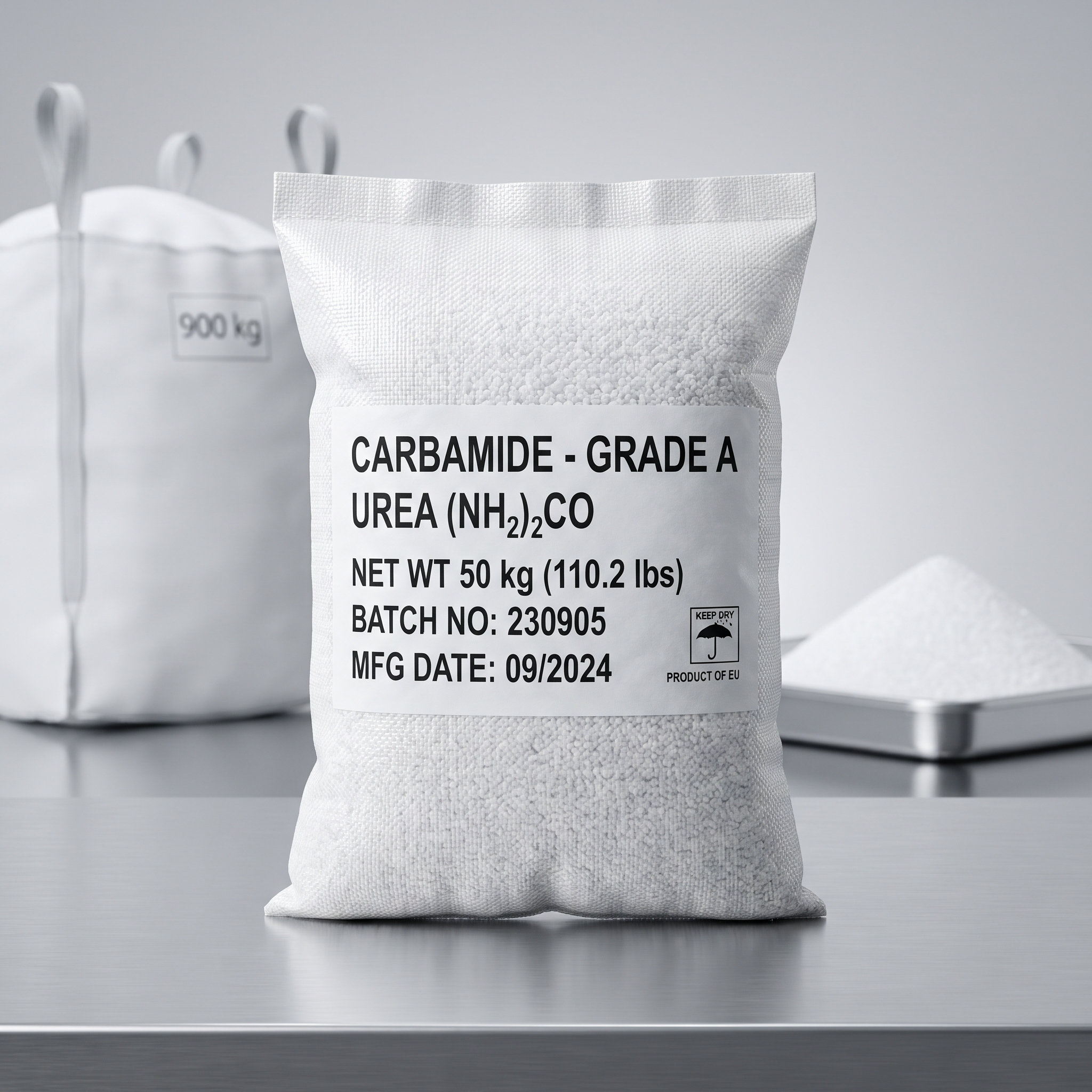
Supply is in bulk, in polypropylene or paper bags of 50 kg, as well as in flexible specialized containers (big bags) of 500, 800 or 1000 kg capacity. For export batches, packaging and net weight are established in accordance with the foreign trade organization order.
Regulatory Framework for Incoming Inspection
- GOST 2081-2010 - carbamide. Specifications. Establishes requirements for grades A and B, sorts, analytical methods and acceptance rules.
- GOST 2226 - paper bags. Specifications (for paper packaging).
- GOST 14192 - cargo marking.
- GOST 12.1.007-76 - classification of hazardous substances. Carbamide belongs to moderately hazardous substances of the third class but is not a dangerous good during transport.
- ISO 15905 - methods for determination of biuret content in carbamide for harmonization with international practice.
For imported batches, the specification is based on manufacturer standards and harmonized ISO methods. The batch specification is confirmed by the manufacturer certificate of quality and the results of incoming laboratory control by the recipient.
Mechanism of Action and Functional Role
In industrial synthesis, carbamide acts as a source of amide nitrogen and a carbonyl group. On reaction with formaldehyde, it forms urea-formaldehyde resins used as adhesives in the production of fiberboard, plywood and furniture. Further processing yields melamine, cyanuric acid and a wide range of nitrogen-containing compounds.
In agriculture, carbamide acts as a nitrogen source for plants: in soil it is hydrolyzed by urease to form ammonia and carbon dioxide, after which nitrogen becomes available to the root system. In livestock, carbamide is used as a feed additive for ruminants, where it serves as a source of non-protein nitrogen for microbial protein synthesis in the rumen.
In SCR systems, carbamide in the form of an aqueous solution (AdBlue) is injected into exhaust gases, where under the action of a catalyst it decomposes to form ammonia, which reduces nitrogen oxides to nitrogen and water. For this application, high carbamide purity and minimal content of impurities capable of poisoning the catalyst are important.
Applications by Industry
Agriculture
The largest consumption direction. Grade B carbamide is used as a high-concentration nitrogen fertilizer for all soil types and crops, as well as a feed additive in livestock. It is fully water-soluble, allowing use in fertigation systems.
Chemical Industry and Woodworking
Grade A carbamide is used to produce urea-formaldehyde resins, adhesives, melamine, cyanuric acid, pharmaceuticals and cosmetics. Carbamide-based resins are widely used in the production of particleboard, fiberboard, plywood and furniture.
Exhaust Gas Treatment
High-purity aqueous carbamide solution is used as an SCR reagent (AdBlue) to reduce nitrogen oxide emissions from diesel engines, including trucks, buses and industrial installations.
Other Industries
Carbamide is used in the production of fire-retardant impregnations, plastics, as a component of drilling fluids, and in the food industry as additive E927b.
Comparison with Alternative Nitrogen Products
Compared with ammonium nitrate, carbamide contains more nitrogen (46.2 percent versus 34.5 percent), is not explosive and is easier to store and transport, although it is inferior in speed of action in cold soils. Compared with ammonium sulfate, carbamide provides a higher nitrogen concentration and contains no sulfate sulfur, which is important for crops sensitive to chloride and sulfates.
In industrial resin synthesis, carbamide competes with melamine but has an advantage in cost, although it is inferior in water resistance and heat resistance of the final resins. For SCR systems, carbamide competes with alternative ammonia sources but remains the most convenient and safe reagent for mobile and stationary installations.
Supplier Selection Criteria and Specification Development
The specification for carbamide must include the grade (A or B), sort, nitrogen and biuret mass fractions, granulometric composition and granule strength for grade B, as well as the supply form (bulk, bags, big bags) and transport conditions. For industrial use, limits for moisture and free ammonia are additionally specified; for SCR applications, requirements for purity and the absence of catalyst poisons.
The supplier confirms batch-to-batch quality consistency, a valid safety data sheet under GOST 30333-2022 and readiness to provide packaging that protects against moisture. For imported batches, it is important to verify labeling and actual parameters, as well as storage conditions at the warehouse before shipment.
Typical Processing, Storage and Logistics Errors
- Violation of storage conditions. Carbamide is hygroscopic; storage in humid areas or in the open leads to caking and loss of flowability. The product is stored in closed warehouses protected from atmospheric precipitation.
- Mixing with other fertilizers or chemicals. Bulk storage must not allow mixing of carbamide with other fertilizers and materials, as this can lead to chemical reactions and contamination.
- Use of contaminated packaging. Residues of other products can contaminate carbamide and reduce its quality, especially for industrial and SCR applications.
- Overheating during processing. Above the melting point, carbamide decomposes to form biuret, reducing product quality. The temperature regime of melting and drying must be observed.
- Use of carbamide beyond its shelf life without control. The shelf life is 6 months from the date of manufacture; after this period, incoming inspection of nitrogen, moisture and biuret content is required.
- Neglecting dust protection. Carbamide dust irritates the respiratory tract; a respirator is recommended when working with bulk and bags.
Quality Control and Laboratory Methods
Incoming inspection of carbamide includes determination of the nitrogen mass fraction (titration or Kjeldahl method), biuret (photometric or high-performance liquid chromatography), water (drying or Fischer method), granulometric composition (sieve analysis) and static granule strength. Sampling is performed by standardized methods; the combined sample is analyzed in the plant laboratory.
When changing supplier or batch for industrial use, a control run of the target product (resin, SCR solution) is recommended to confirm compatibility with the process.
Storage and Transportation Conditions
Carbamide is not classified as a dangerous good. Storage is carried out in closed, well-ventilated warehouses protecting the product from atmospheric precipitation. Bulk storage must exclude mixing with other fertilizers and materials. The shelf life is 6 months from the date of manufacture; the agrochemical shelf life for grade B is unlimited.
Transportation is by all types of covered transport except air, in accordance with cargo transport rules. Bulk carbamide is carried in specialized hopper cars, mineral carriers and road transport; packaged product in bags and big bags. Packaging must protect the product from moisture and mechanical damage.
Finding Analogues and Interchangeability
When replacing carbamide, a product of the same grade and sort with similar nitrogen, biuret and moisture parameters is selected. Replacing grade A with grade B is possible only in applications not requiring increased purity and reduced biuret content, with confirmation of final product properties. Replacing carbamide with ammonium nitrate or ammonium sulfate in agriculture is possible with recalculation of the nitrogen dose, but requires consideration of differences in speed of action and content of accompanying elements.
In industrial resin synthesis, replacing carbamide with melamine is possible but changes the resin properties and product cost. The replacement decision is based on laboratory testing and, for critical processes, pilot-scale verification.
Supply Routes: Russia, China and Other Regions
Domestic supply is provided by gas chemical complexes with carbamide production capacity. Products are supplied to the domestic market and for export. Shipment is by rail in hoppers and covered cars, and by road in bags and big bags.
China is a large producer and consumer of carbamide. For 2026, China approved a tariff quota for carbamide imports of 3.3 million tonnes, while in January-September 2025 China imported more than 3.48 million tonnes of fertilizers from Russia. Supplies are delivered by sea with subsequent transfer to rail or road transport. Other global producers are located in the Middle East, Southeast Asia, Europe and North Africa. Suppliers from these regions are engaged when required, taking into account logistical and regulatory factors, as well as quotas and duties in the destination country.
Logistics and Customs Clearance
Transportation of carbamide is carried out in bulk in specialized rail cars and road transport, as well as in bags and big bags in covered vehicles. Customs clearance includes classification under HS code 3102100000, preparation of a safety data sheet under GOST 30333-2022 (if required) and conformity declaration. The portal provides customs broker services and supports all clearance stages.
Risk Factors and Safety Measures
Carbamide is not a dangerous good but belongs to moderately hazardous substances of the third class per GOST 12.1.007-76. The main risks are associated with dust generation when working with bulk and bags, irritation of the respiratory tract and mucous membranes, and product contamination during improper storage. Work is performed in ventilated rooms with respirators and protective goggles; in case of skin contact, the area should be washed with water.
In case of a spill, carbamide is collected mechanically and residues are washed off with plenty of water. Discharge of concentrated carbamide solutions into water bodies without prior dilution is not permitted, as it can cause eutrophication.
FAQ: Common Questions from Procurement and Process Specialists
How does grade A differ from grade B under GOST 2081-2010
Grade A is intended for industry: production of resins, adhesives, melamine, cyanuric acid, pharmaceuticals and cosmetics. Grade B is intended for agriculture (crop production) and livestock. Grade A has stricter limits for biuret (0.6 percent for premium) and free ammonia, while grade B standardizes granulometric composition, granule strength and flowability.
Is carbamide a dangerous good
No, carbamide is not classified as a dangerous good during transport. It is classified as a moderately hazardous substance of the third class by health impact but does not require special packaging or hazard labels. The main requirements are protection from moisture and dust protection during work.
Which packaging is used for carbamide
Carbamide is supplied in bulk, in polypropylene or paper bags of 50 kg, as well as in flexible specialized containers (big bags) of 500, 800 or 1000 kg capacity. Packaging must protect the product from moisture; for export batches, net weight and packaging type are established by the order.
What is the shelf life of carbamide
The shelf life is 6 months from the date of manufacture under proper storage conditions (closed warehouses, protection from precipitation). The agrochemical shelf life for grade B is unlimited. After the shelf life expires, incoming inspection of nitrogen, moisture and biuret content is required.
What documents are required for carbamide import
Import requires a contract, invoice, packing list, manufacturer certificate of quality, transport documents and a declaration of conformity if required. Carbamide is not classified as a dangerous good, so additional permits for the transport of dangerous goods are not required. The portal organizes the preparation of the document set and interaction with the customs broker.
Conclusion
Carbamide remains an indispensable large-tonnage nitrogen product, providing agriculture with a high-concentration nitrogen fertilizer and industry with feedstock for resins, adhesives, melamine and SCR reagents. GOST 2081-2010 establishes grades A and B with sort divisions differing in nitrogen, biuret and granulometric composition. For procurement teams, the practical task reduces to correct grade and sort selection, confirmation of batch conformity to the standard, and organization of supplies with storage conditions that exclude moistening and caking of the product.
Contact Us
For procurement inquiries and supply chain organization, contact the portal team at info@apptrade.ru.