














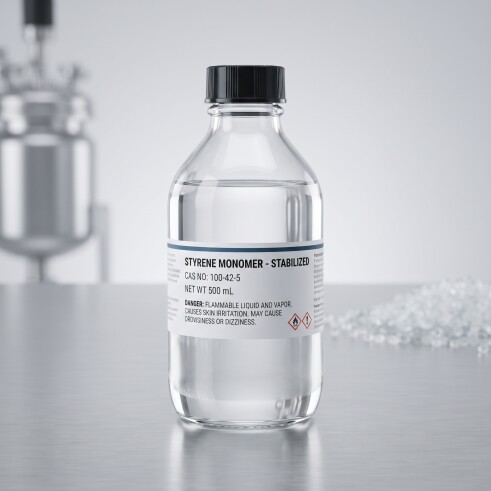
Styrene Monomer
Styrene Monomer: Technical Overview for Industrial Applications
Styrene (vinylbenzene, phenylethylene, ethenylbenzene) is an aromatic hydrocarbon produced by catalytic dehydrogenation of ethylbenzene. In industrial practice, styrene occupies a central position as the monomer for large-scale production of polystyrene and its copolymers. Its primary function is to provide the feedstock base for general-purpose polystyrene, high-impact polystyrene, ABS plastics, styrene-acrylonitrile copolymers, and synthetic rubbers and latexes. The ability of styrene to undergo radical and ionic polymerization makes it a versatile monomer for a wide range of polymeric materials.
Chemical Identification
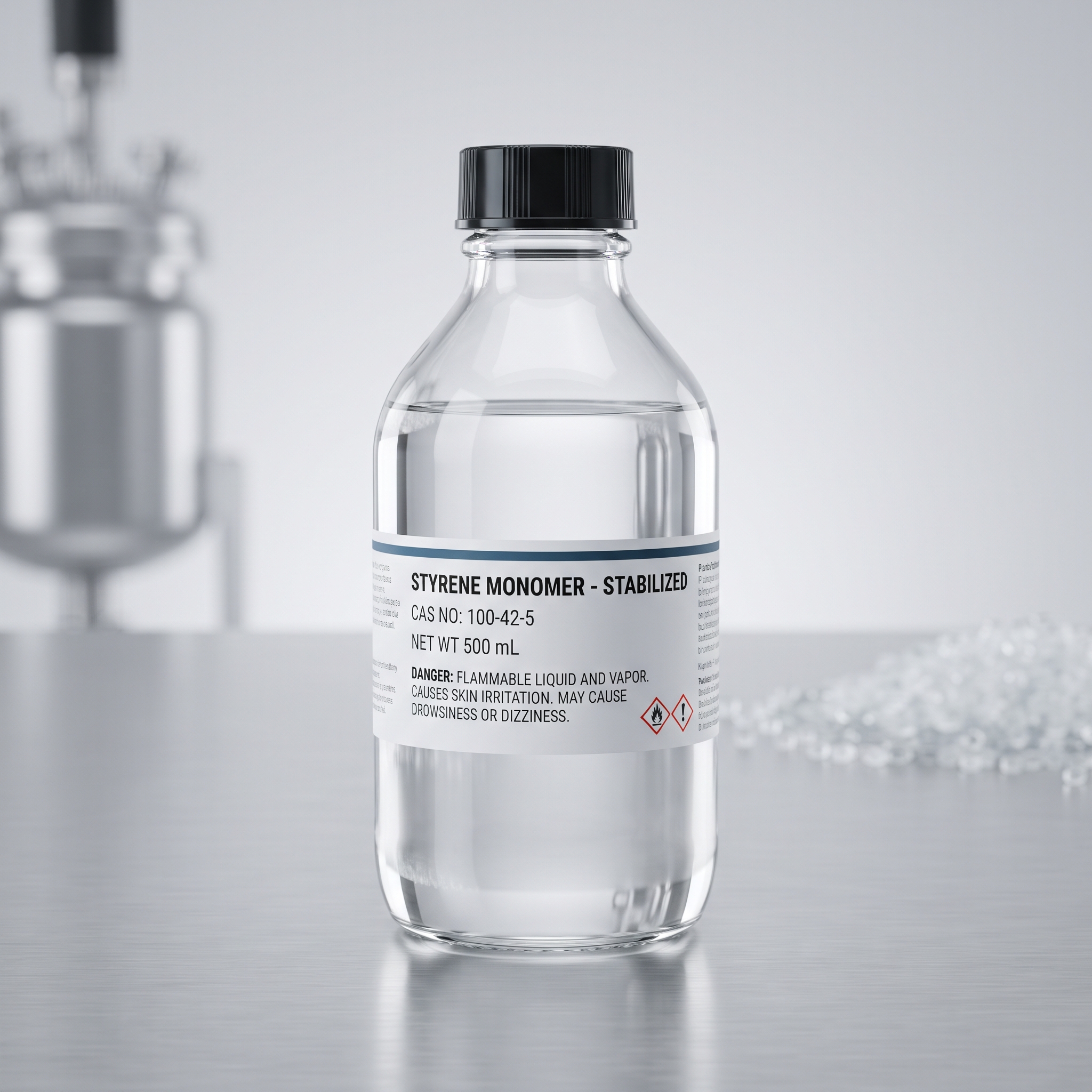
Styrene is identified by CAS 100-42-5, empirical formula C8H8, structural formula C6H5CH=CH2, relative molecular mass 104.15. In international trade, it is classified under HS heading 2902 50 000 0 as styrene. Synonyms include vinylbenzene, phenylethylene, ethenylbenzene, and styrene monomer. The substance is assigned to hazard class 3 for health effects (moderately hazardous substance) and shows limited evidence of a carcinogenic effect. Styrene tends to undergo spontaneous polymerization upon heating, exposure to light, and in the presence of initiators, so the industrial product is stabilized with an inhibitor (typically tert-butylcatechol).
Physicochemical Properties
Styrene is a colorless transparent oily liquid with a mild specific odor. Density at 20 degrees Celsius is about 0.906 g/cm3. Boiling point is 145.2 degrees Celsius, pour point minus 30.6 degrees Celsius. Flash point is 31 degrees Celsius in a closed cup, autoignition temperature about 490 degrees Celsius. Explosive limits in air are 1.1 percent (lower) and 6.1 percent (upper) by volume. Vapor pressure at 25 degrees Celsius is about 6.1 mm Hg. Refractive index at 20 degrees Celsius is 1.546. Styrene is practically insoluble in water and miscible with most organic solvents. Upon storage in light and in contact with air, it slowly polymerizes with the formation of peroxides.
Technical Grades and Supply Forms
Styrene is produced under GOST 10003-90. The standard provides for grades SDEB (styrene produced by dehydrogenation of ethylbenzene) and SDMFK (styrene produced by dehydrogenation of methylphenylcarbinol). The main substance mass fraction is at least 99.8 percent for the highest grade and at least 99.6 percent for the first grade. The product is supplied in bulk in rail and road tank cars, tank containers, and steel drums. Typical bulk shipments start from one tonne.
Regulatory Framework
In the EAEU region, quality is governed by GOST 10003-90 Styrene. Specifications. The standard sets requirements for physicochemical indicators, packaging, marking, transportation, and storage. Transport marking is performed under GOST 14192 indicating hazard class 3, UN number 2055, and classification code 3313. For customs purposes, the explanatory notes to HS heading 2902 50 000 0 apply.
Mechanism of Action and Functional Role
In polymerization processes, styrene undergoes chain reactions initiated thermally, photochemically, or by chemical initiators. The double bond of the vinyl group opens, enabling the binding of monomer units into a macromolecule. In copolymerization with acrylonitrile and butadiene, styrene imparts rigidity, transparency, and good dielectric properties to the final material. In ABS plastics, styrene together with acrylonitrile and butadiene provides a balance of impact strength, heat resistance, and processability. As a solvent, styrene is used to a limited extent in the coatings industry, but its primary value lies in its reactivity in polymerization reactions.
Applications by Industry
The main volume of styrene is consumed in the production of general-purpose polystyrene (GPPS) and high-impact polystyrene (HIPS), used in packaging, household appliances, toys, and construction materials. The production of ABS plastics for the automotive industry, electronics, and household appliances is the second-largest application. Styrene-acrylonitrile copolymers (SAN) are used in the production of appliance housings and packaging. Styrene-butadiene rubbers and latexes (SBS, SBR) are used in the footwear, road, and coatings industries. Styrene is also used in the production of unsaturated polyester resins and ion-exchange resins.
Comparison with Alternative Materials
Compared with acrylonitrile, styrene provides higher transparency and better dielectric properties of polymers but is inferior in chemical resistance and heat resistance. Compared with methyl methacrylate, styrene is more cost-effective and provides higher rigidity but is inferior in weather resistance and optical clarity. In the production of impact-resistant materials, styrene in ABS plastics competes with polycarbonate compositions and ABS-polycarbonate blends, being inferior to the latter in heat resistance but superior in processability and cost.
Typical Processing Errors
- Storing styrene without an inhibitor or with an expired inhibitor, leading to spontaneous polymerization in the container.
- Violating storage temperature conditions above 25 degrees Celsius or under direct sunlight, accelerating polymerization.
- Using contaminated styrene or product with elevated polymer content in polymerization processes, reducing final product quality.
- Working with styrene without respiratory and skin protection, creating a risk of acute poisoning.
- Mixing styrene with oxidizers or polymerization initiators without control, which may cause an uncontrolled reaction.
- Applying styrene in systems requiring long-term storage without stabilization, without considering its tendency to polymerize.
Quality Control and Laboratory Methods
Incoming inspection of styrene includes determination of appearance and color, density at 20 degrees Celsius, refractive index, main substance content by gas chromatography, polymer content, aldehyde content calculated as benzaldehyde, moisture content by the Karl Fischer method, color after exposure to sulfuric acid, and inhibitor content. For critical applications, peroxide content and thermal stability time are controlled.
Storage and Transportation Conditions
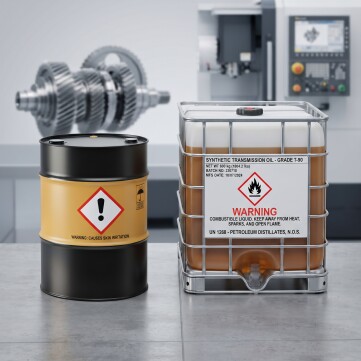
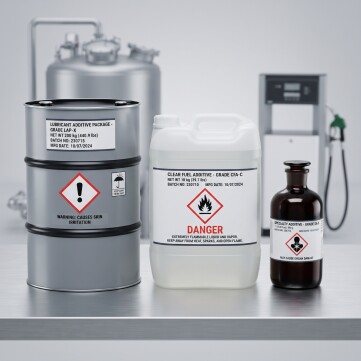
Styrene is stored in sealed containers in ventilated warehouses at temperatures from minus 10 to plus 25 degrees Celsius, protected from direct sunlight and heat sources. The guaranteed shelf life is typically 6 to 12 months depending on conditions and inhibitor content. Styrene is classified as dangerous goods: hazard class 3, UN number 2055, packing group III, classification code 3313. Transportation is carried out by all modes of transport in accordance with dangerous goods regulations. Road transport follows ADR requirements; sea transport follows IMDG Code.
Finding Analogues and Interchangeability
When selecting an analogue for styrene, the key criteria are main substance content, inhibitor content, polymer content, and color. For polystyrene and ABS production, replacing styrene with other monomers alters the properties of the final polymer and requires revision of the entire formulation and technology. For applications in unsaturated polyester resins, styrene can be partially replaced by vinyltoluene or methyl methacrylate, but this changes the curing rate and properties of the finished product. Direct substitution without preliminary testing is not recommended.
Supply Scheme
For industrial buyers, styrene is available worldwide through the apptrade.ru platform. Shipments can be organized from producing regions across different continents, with logistics and customs support adapted to the destination market. International sourcing allows buyers to balance cost and lead time depending on batch size and logistical distance.
Logistics and Customs Clearance
Styrene is transported by sea, rail, and road. For large batches, sea tank containers or dedicated tankers are economically viable; for medium and small volumes, drums and intermediate bulk containers are used. When imported into the EAEU, products are classified under HS heading 2902 50 000 0. As styrene is class 3 dangerous goods, compliance with ADR packaging, marking, and documentation requirements is mandatory. The portal customs broker prepares declarations, confirms classification codes, and manages non-tariff regulation procedures.
FAQ
What is the difference between styrene and polystyrene?
Styrene (C8H8) is a liquid monomer used for polymer synthesis. Polystyrene is a solid polymer obtained by polymerizing styrene. Styrene is the starting feedstock; polystyrene is the final product.
Why does styrene require stabilization?
Styrene tends to undergo spontaneous polymerization upon heating, exposure to light, and in the presence of impurities. To prevent undesirable polymerization during storage and transportation, an inhibitor, typically tert-butylcatechol, is added to styrene.
What hazard class is assigned to styrene?
Styrene is hazard class 3 for health effects as a moderately hazardous substance. For transport, it is classified as class 3 dangerous goods, UN number 2055, packing group III.
How long can styrene be stored?
The guaranteed shelf life of styrene is typically 6 to 12 months from the date of manufacture at temperatures from minus 10 to plus 25 degrees Celsius in sealed containers. After expiry, the product must undergo laboratory testing before use.
Is special packaging required for styrene transportation?
Yes, because styrene is class 3 dangerous goods. Hermetic tank cars, tank containers, and steel drums complying with ADR requirements for flammable liquids are used. Packaging must ensure tightness and protection against leaks.
What is the difference between grades SDEB and SDMFK?
Grade SDEB is produced by catalytic dehydrogenation of ethylbenzene; grade SDMFK is produced by dehydrogenation of methylphenylcarbinol. Both grades comply with GOST 10003-90 and differ in production technology, which may slightly affect impurity content.
Conclusion
Styrene remains a foundational monomer for the production of polystyrene, ABS plastics, and synthetic rubbers, determining the properties of a wide range of polymeric materials. For industrial buyers, critical factors include batch-to-batch consistency, especially inhibitor and polymer content, correct customs classification considering dangerous goods status, and compliance with storage conditions. The apptrade.ru portal organizes the full supply cycle, from grade selection for a specific process to customs clearance and delivery to the manufacturing site.
Contact Us
For procurement inquiries, technical documentation, and logistics coordination, contact the apptrade.ru team at info@apptrade.ru.