















Ammophos (MAP)
Ammophos: Technical Overview for Agro-Industrial Applications
Ammophos (monoammonium phosphate, ammonium dihydrogen phosphate) is a high-analysis granular nitrogen-phosphorus fertilizer produced by neutralizing phosphoric acid with ammonia. In the agro-industrial complex, ammophos occupies a leading position among phosphorus-containing fertilizers due to its optimal nutrient ratio and excellent physical and mechanical properties. Its primary function is to supply plants with readily available phosphorus and ammonium nitrogen, which is especially important during the initial growth period when the root system is not yet capable of efficiently absorbing sparingly soluble phosphate forms. Ammophos also serves as a valuable component for preparing dry fertilizer blends and complex fertilizers.
Chemical Identification
The main component of ammophos is monoammonium phosphate (ammonium dihydrogen phosphate) with the chemical formula NH4H2PO4. The product also contains diammonium phosphate (diammonium hydrogen phosphate) at about 5 percent, along with impurities of ammonium sulfate, magnesium, iron, and aluminum phosphates. Ammophos is not a single chemical compound with an assigned CAS number in commercial form, as it is a mixture of salts. In international trade, it is classified under HS heading 3105 40 000 0 as mineral or chemical fertilizers containing two or three of the fertilizing elements nitrogen, phosphorus, and potassium; ammonium dihydrogenorthophosphate (monoammonium phosphate) and mixtures thereof with diammonium hydrogenorthophosphate (diammonium phosphate). Ammophos is assigned to hazard class 4 for health effects (low-hazard substance) under GOST 12.1.007; it is non-toxic, fire-safe, and explosion-safe.
Physicochemical Properties
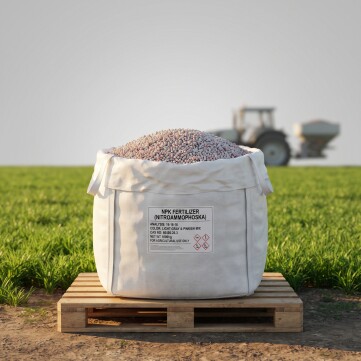
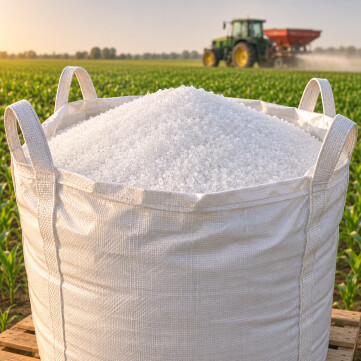
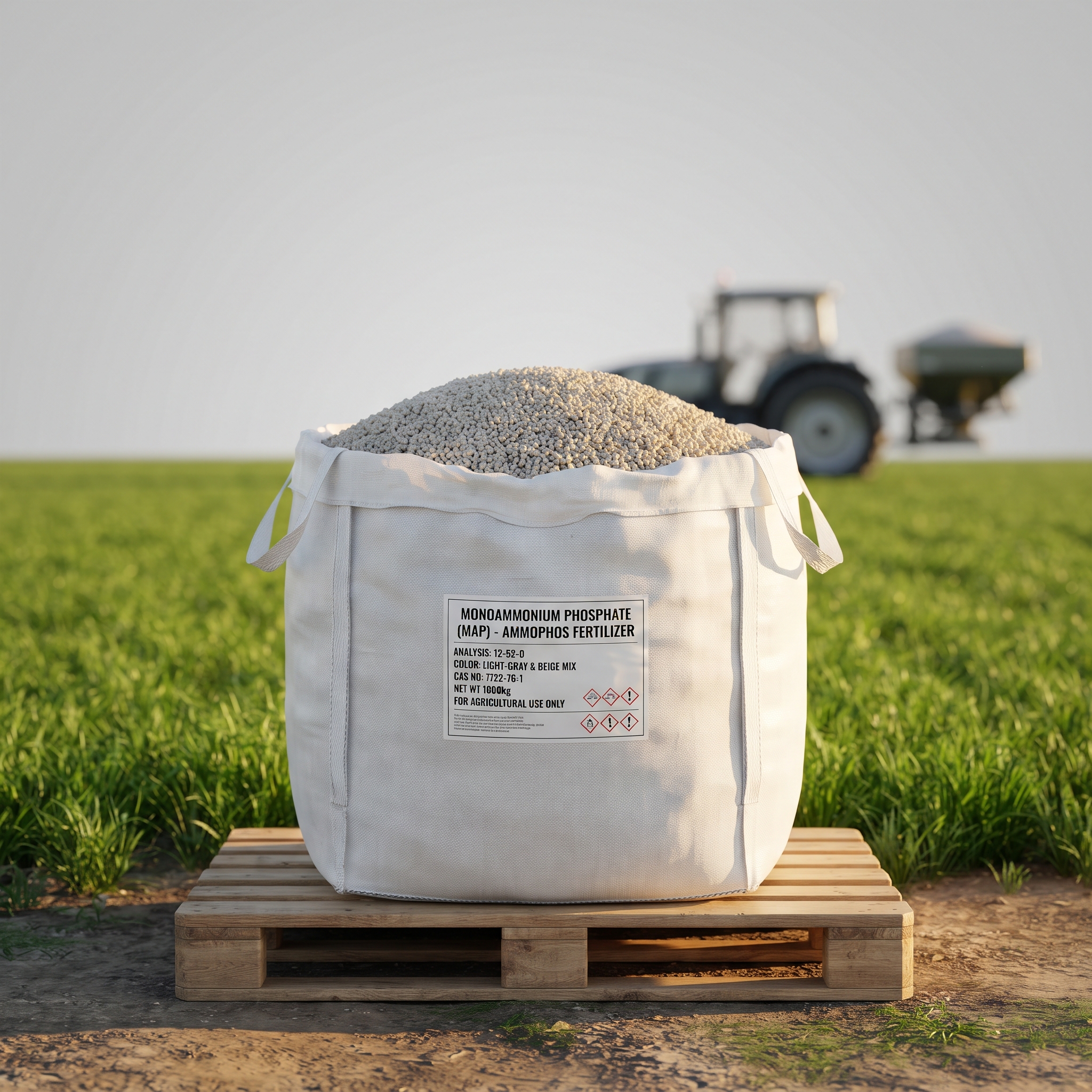
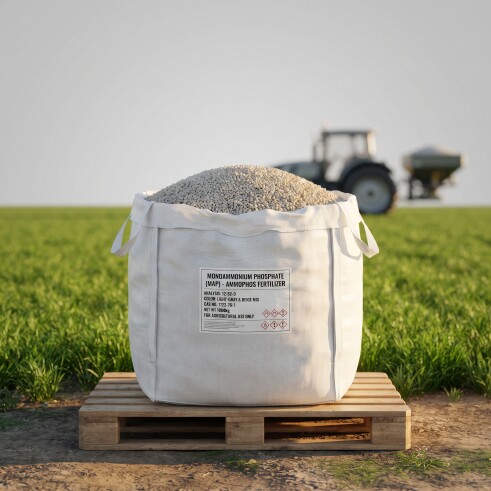
Ammophos consists of light-gray, beige, or yellowish granules with a mild specific odor. The total nitrogen mass fraction calculated on dry substance ranges from 10 to 12 percent depending on grade and class. The available phosphate mass fraction calculated as phosphorus oxide (P2O5) ranges from 44 to 52 percent for various grades. The water-soluble phosphate fraction reaches 34-48 percent, ensuring high phosphorus availability to plants. The water mass fraction does not exceed 1.0 percent. Granulometric composition: the mass fraction of granules sized 1 to 4 mm is at least 90-95 percent, granules below 1 mm not more than 2-3 percent. Ammophos has the best physical and mechanical properties among produced phosphorus-containing fertilizers: it does not cake, does not dust, and retains flowability during storage and transportation. Granule density and bulk density ensure ease of use in blending plants and application by agricultural machinery.
Technical Grades and Supply Forms
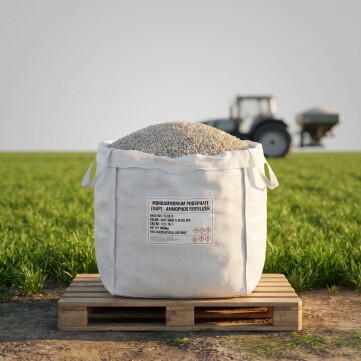
Under GOST 18918-85, ammophos is produced in two grades depending on the raw material. Grade A is made from extraction phosphoric acid obtained from apatite concentrate or other raw material with a total phosphate mass fraction of at least 30 percent, as well as from thermal phosphoric acid. Grade B is made from extraction phosphoric acid from Karatau phosphorites or other raw material with a total phosphate mass fraction of not more than 28 percent. Within each grade, highest and first classes are distinguished, differing in nutrient content norms. Ammophos of both grades can be produced with micronutrient additives: copper, zinc, or boron. The product is supplied in bulk in rail cars and road transport, in polypropylene bags of 50 kg, and in big bags of 800 and 1000 kg capacity. Typical agricultural bulk shipments start from one tonne; for large agroholdings and traders, from 20 tonnes and more.
Regulatory Framework
In the EAEU region, quality of ammophos is governed by GOST 18918-85 Ammophos. Specifications. The standard sets requirements for physicochemical indicators of grades A and B, granulometric composition, packaging, marking, transportation, and storage. The product, as a mineral fertilizer, is subject to conformity declaration under the EAEU technical regulation on requirements for mineral fertilizers, which sets radiation and chemical safety norms. For customs purposes, the explanatory notes to HS heading 3105 40 000 0 apply.
Mechanism of Action and Functional Role
In soil solution, monoammonium phosphate dissociates to release ammonium and dihydrogen phosphate ions. The ammonium ion is retained by the soil absorption complex and gradually nitrified by microorganisms, providing prolonged nitrogen nutrition. The dihydrogen phosphate ion is readily soluble and available to the root system; however, in soil it gradually transforms into less soluble forms, so ammophos is particularly effective when applied near the roots, in bands or at sowing. The physiological acidity of ammophos is insignificant, allowing its use on various soil types without the risk of pronounced acidification. Phosphorus in ammophos plays a key role in plant energy metabolism, root system development, formation of reproductive organs, and fruit ripening.
Applications by Industry
Crop production is the main consumer of ammophos. The product is used as a basal fertilizer for all agricultural crops on all soil types, for pre-sowing application, and is especially effective as a starter (banded) fertilizer, where phosphorus is applied directly into the root development zone. Ammophos is particularly in demand in the cultivation of cereals (wheat, barley, corn), sugar beet, sunflower, potatoes, vegetables, and fruit and berry crops. Application rates range from 120 to 180 kg/ha in physical weight depending on the crop, soil phosphorus availability, and planned yield. In commercial horticulture and greenhouse operations, ammophos is used as a component of nutrient solutions due to the high solubility of its phosphates. Ammophos also serves as raw material for the production of complex and blended fertilizers at blending plants.
Comparison with Alternative Materials
Compared with simple superphosphate, ammophos contains a significantly higher phosphorus concentration (44-52 percent versus 14-20 percent) and additionally provides nitrogen, reducing storage, transport, and application costs per unit of active ingredient. Compared with diammonium phosphate, ammophos contains less nitrogen but offers better solubility and a more favorable nutrient ratio for starter application. Compared with complex fertilizers such as nitroammophoska, ammophos provides higher phosphorus content and is suitable for crops with increased phosphorus demand in early development stages. The choice between these forms is determined by soil agrochemical parameters and the requirements of the specific crop.
Typical Processing Errors
- Surface application of ammophos without incorporation into the soil, reducing phosphorus nutrition efficiency due to phosphate conversion into less available forms.
- Mixing ammophos with ammonium nitrate or other fertilizers containing free ammonium nitrate without considering compatibility, which may impair the physical properties of the mixture.
- Storing ammophos under high humidity without protection from atmospheric precipitation, which may cause caking, although ammophos has good flowability.
- Using ammophos with impaired granulometric composition (elevated dust fraction) in fertilizer blends, leading to component segregation and uneven application.
- Applying ammophos without considering soil phosphorus content, leading to inefficient fertilizer use and possible phosphate accumulation.
- Violating the tightness of big bags or sacks during storage on open platforms, causing product wetting and loss of commercial properties.
Quality Control and Laboratory Methods
Incoming inspection of ammophos includes determination of appearance and granule color, total nitrogen mass fraction, available and water-soluble phosphate mass fraction calculated as phosphorus oxide, water mass fraction, granulometric composition, granule static strength, and flowability. Nitrogen content is determined by ammonia distillation after sample decomposition. Phosphorus content is determined by photometric or titrimetric method after phosphate dissolution. Water mass fraction is determined by drying. Test methods are governed by GOST 18918-85 and relevant standards for mineral fertilizer analysis.
Storage and Transportation Conditions
Ammophos is stored in closed, dry, clean warehouses excluding atmospheric precipitation (rain, snow) and groundwater ingress. Product packaged in big bags or sacks may be stored on pallets or racks ensuring protection from moisture. When storing in bulk, mixing ammophos with other fertilizers should be avoided. The guaranteed shelf life is 9 months from the date of manufacture under proper storage conditions. Ammophos is not classified as dangerous goods for transport, simplifying logistics. Transportation is carried out by all modes of transport except air, in accordance with cargo transport rules. In bulk, ammophos is transported in dedicated self-unloading rail cars, closed deck ships, and road vehicles equipped with a tarpaulin covering the body.
Finding Analogues and Interchangeability
When selecting an analogue for ammophos, the key criteria are available and water-soluble phosphorus content, nitrogen content, granulometric composition, and application. For basal application to cereals, replacement with diammonium phosphate or a complex fertilizer with a similar phosphorus-to-nitrogen ratio is possible with dosage adjustment. For starter application, ammophos with high water-soluble phosphorus content and good granulometry is preferable. For fertilizer blend preparation, ammophos can be partially replaced by other phosphorus-containing components while maintaining the calculated nutrient content. Direct substitution without consideration of agronomic requirements and soil analysis results is not recommended.
Supply Scheme
For agricultural producers and industrial buyers, ammophos is available worldwide through the apptrade.ru platform. Shipments can be organized from producing regions across different continents, with logistics and customs support adapted to the destination market. International sourcing allows buyers to balance cost and lead time depending on batch size and logistical distance, especially for bulk sea shipments or big bag deliveries.
Logistics and Customs Clearance
Ammophos is transported by sea, rail, and road. For large batches, bulk transport in dedicated self-unloading rail cars or sea vessels is economically viable; for medium and small volumes, big bags and sacks are used. When imported into the EAEU, products are classified under HS heading 3105 40 000 0. As ammophos is not dangerous goods, special dangerous goods packaging and marking requirements do not apply; however, phytosanitary and sanitary norms must be observed. The portal customs broker prepares declarations, confirms classification codes, and manages non-tariff regulation procedures.
FAQ
What is the difference between ammophos grade A and grade B?
Grade A is made from extraction phosphoric acid obtained from apatite concentrate or raw material with a total phosphate mass fraction of at least 30 percent, as well as from thermal phosphoric acid. Grade B is made from extraction phosphoric acid from Karatau phosphorites or raw material with a total phosphate mass fraction of not more than 28 percent. Grade A typically contains a higher amount of available phosphates.
Can ammophos be used for all crops?
Yes, ammophos is a universal fertilizer for all agricultural crops on various soil types. It is especially effective for crops with increased phosphorus demand in early development stages, including cereals, sugar beet, sunflower, potatoes, and vegetables.
Is ammophos classified as dangerous goods for transport?
No, ammophos is not classified as dangerous goods for transport. It is non-toxic, fire-safe, and explosion-safe, assigned to hazard class 4 as a low-hazard substance. Special permits and dangerous goods marking are not required.
What is the phosphorus content in ammophos?
The available phosphate mass fraction calculated as phosphorus oxide ranges from 44 to 52 percent depending on grade and class. The water-soluble phosphate fraction reaches 34-48 percent, ensuring high phosphorus availability to plants.
What is the shelf life of ammophos?
The guaranteed shelf life of ammophos is 9 months from the date of manufacture under storage conditions in closed, dry warehouses. After expiry, the product must undergo laboratory testing before use.
Can ammophos be mixed with other fertilizers?
Ammophos has good physical and mechanical properties and is an optimal component for dry fertilizer blends. However, mixing with certain fertilizers, especially those containing free ammonia or readily soluble salts, requires preliminary compatibility testing to avoid impairing the physical properties of the mixture.
Conclusion
Ammophos remains one of the most in-demand phosphorus-containing fertilizers due to its high water-soluble phosphorus concentration, nitrogen content, excellent physical and mechanical properties, and versatility of application. For agro-industrial buyers, critical factors include batch-to-batch consistency, especially available phosphate content and granulometry, correct customs classification, and compliance with storage conditions to preserve flowability. The apptrade.ru portal organizes the full supply cycle, from grade selection for a specific crop and soil condition to customs clearance and delivery to the manufacturing site.
Contact Us
For procurement inquiries, technical documentation, and logistics coordination, contact the apptrade.ru team at info@apptrade.ru.