Antifreeze and Coolant
Antifreeze and Coolant Fluids: Technical Overview for Industrial Applications
Antifreeze and coolant fluids are aqueous glycol solutions with packages of anti-corrosion, anti-foam, stabilizing, and coloring additives. In industrial practice, these fluids occupy a central position in internal combustion engine cooling systems and as working heat transfer media in other heat exchange equipment operating at low and moderate temperatures. Their primary function is to lower the freezing point of the coolant, raise the boiling point, protect metal surfaces from corrosion and cavitation, and ensure stable heat removal.
Chemical Identification
Antifreeze fluids are not single chemical compounds. They are multicomponent water-glycol compositions. The base is ethylene glycol or propylene glycol with a water mass fraction of up to 30 percent in the concentrate. In international trade, ready-to-use antifreeze fluids are classified under HS heading 3820 00 000 0 as antifreezes and prepared de-icing fluids. Glycol-based concentrates also fall under this heading provided they contain a full additive package. Accurate description of the base, glycol content, and functional additives is required for customs clearance.
Physicochemical Properties
Properties are governed by the glycol type and concentration, as well as the additive package. Density of ready-to-use fluids at 20 degrees Celsius ranges from 1.065 to 1.100 g/cm3 depending on grade. The initial crystallization temperature is not above minus 40 degrees Celsius for OZH-40 and not above minus 65 degrees Celsius for OZH-65. The boiling point of ready-to-use fluids is typically in the range of 108 to 113 degrees Celsius. The pH of working solutions under GOST 28084-89 must be within 7.5 to 11.0. Alkalinity is specified as the volume of hydrochloric acid solution consumed in titration and is typically at least 10 ml. Fluids must be transparent, homogeneous, colored, and free of mechanical impurities.
Technical Grades and Supply Forms
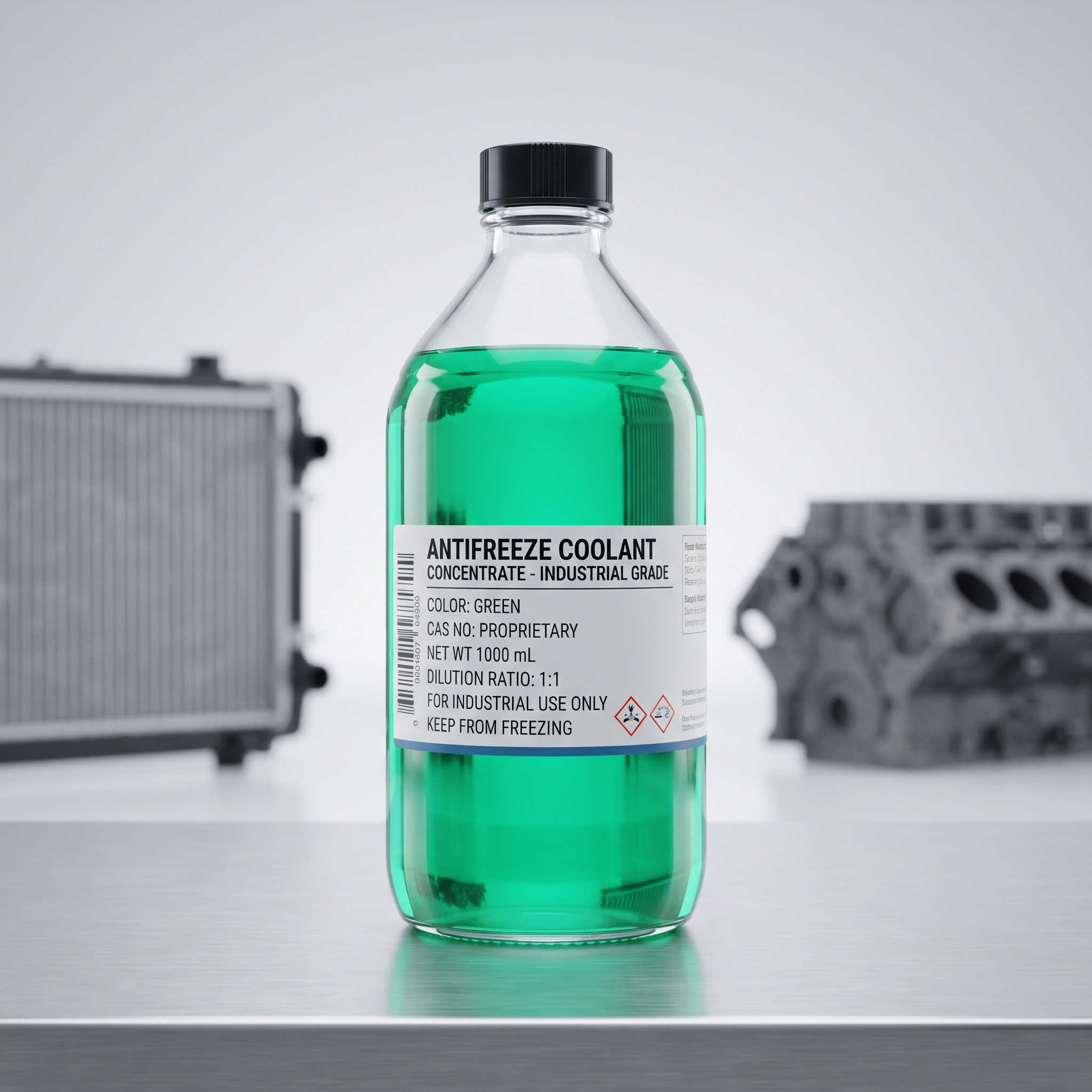
Under GOST 28084-89, low-freezing cooling fluids are produced in three types: concentrate OZH-K with a water mass fraction of not more than 5 percent, ready-to-use fluid OZH-40 with a crystallization temperature not above minus 40 degrees Celsius, and ready-to-use fluid OZH-65 with a crystallization temperature not above minus 65 degrees Celsius. Concentrate OZH-K is not used as a working fluid but is intended for preparing OZH-40 and OZH-65 by dilution with water. In the international classification, which is not an official standard but is widely applied de facto, classes G11 on hybrid additives, G12 on carboxylate additives, and G13 based on glycerol with ethylene glycol are distinguished. Products are supplied in cans, drums, intermediate bulk containers, and tank cars. Typical bulk shipments start from one tonne.
Regulatory Framework
In the EAEU region, quality of low-freezing cooling fluids is governed by GOST 28084-89 Low-Freezing Cooling Fluids. General Specifications. The standard covers fluids intended for cooling internal combustion engines and as working fluids in other heat exchange equipment. The product, as a lubricating material, is subject to conformity declaration under TR CU 030/2012 On Requirements for Lubricating Materials, Oils, and Special Fluids. Hazard class is determined under GOST 12.1.007. Test methods are governed by GOST 18995.1 for density, GOST 22567.5 for pH, and other standards.
Mechanism of Action and Functional Role
Ethylene glycol and propylene glycol lower the crystallization temperature of water by disrupting the ice crystal lattice. When glycol is added to water, the freezing point of the solution decreases, reaching a minimum at a certain concentration, after which it begins to rise again. The additive package forms protective films or chemisorbed layers on metal surfaces that inhibit corrosion. Anti-foam additives prevent foam formation, which reduces heat removal and promotes cavitation. Stabilizers maintain solution homogeneity and prevent sediment formation. Dyes provide visual identification of the fluid and leak detection.
Applications by Industry
The automotive industry and commercial vehicle production consume the largest share of antifreeze fluids for internal combustion engine cooling systems. In power generation, antifreeze fluids are used as intermediate heat transfer media in heating and air conditioning systems. In the food industry, propylene glycol fluids are used in cooling systems where low toxicity is required. In construction, antifreeze fluids are added to concrete mixes for work at sub-zero temperatures and used in snow-melting systems. In the oil and gas sector, fluids are used for equipment cooling and thermostatic control systems. Stationary engines and diesel generators are also consumers of cooling fluids.
Comparison with Alternative Materials
Ethylene glycol antifreezes offer better thermophysical characteristics, especially at low temperatures, and lower cost compared with propylene glycol fluids. However, ethylene glycol is toxic when ingested. Propylene glycol fluids are less toxic and are more often used in systems where contact with food products is possible, but they are inferior to ethylene glycol fluids in low-temperature efficiency and have a higher cost. By additive class, hybrid G11 fluids provide rapid protection through film formation, carboxylate G12 fluids act locally at corrosion sites and last longer, and lobrid G12++ and G13 combine both mechanisms. The choice is determined by equipment manufacturer requirements and operating conditions.
Typical Processing Errors
- Mixing fluids of different classes and bases without compatibility testing, leading to sediment formation, stratification, and loss of protective properties.
- Diluting ready-to-use antifreeze with water beyond the permissible limit, which raises the crystallization temperature and reduces additive concentration.
- Using hard or contaminated water to prepare a solution from concentrate, reducing stability and provoking scale formation.
- Applying ethylene glycol antifreeze in systems where a propylene glycol base is required by sanitary regulations.
- Storing concentrate or ready-to-use fluid in non-sealed containers, leading to moisture absorption and composition change.
- Neglecting pH and alkalinity control during operation, which indicates degradation of the additive package.
Quality Control and Laboratory Methods
Incoming inspection of antifreeze includes determination of appearance and color, density at 20 degrees Celsius, initial crystallization temperature, pH, alkalinity, and boiling point. For ready-to-use fluids, stability against stratification and mechanical impurity content are also checked. During operation, density is monitored to assess glycol concentration, along with pH, alkalinity, and signs of corrosion or contamination. For critical applications, corrosion tests on metals and compatibility tests with seal materials are performed.
Storage and Transportation Conditions
Antifreeze fluids are stored in sealed containers in ventilated warehouses at temperatures from minus 30 to plus 35 degrees Celsius, protected from direct sunlight and precipitation. Periods of storage at temperatures below minus 20 degrees Celsius and above plus 35 degrees Celsius should be minimized to avoid packaging damage and property changes. The guaranteed shelf life of ready-to-use fluids is typically at least 5 years in closed packaging. Ethylene glycol-based antifreezes are moderately hazardous substances and are not classified as dangerous goods for transport unless they contain other hazardous components. Transportation is carried out by all modes of transport in accordance with cargo transport rules.
Finding Analogues and Interchangeability
When selecting an analogue for antifreeze, the key criteria are base type (ethylene glycol or propylene glycol), additive class (hybrid, carboxylate, lobrid), crystallization temperature, and compatibility with cooling system materials. The fluid being replaced and the new fluid must meet equipment manufacturer requirements. Direct substitution without system flushing and compatibility testing is not recommended, because mixing different additive packages can lead to sediment formation and reduced corrosion protection. For heavily loaded engines and aluminum radiators, fluids with the appropriate additive type are preferred.
Supply Scheme
For industrial buyers, antifreeze and coolant fluids are available worldwide through the apptrade.ru platform. Shipments can be organized from producing regions across different continents, with logistics and customs support adapted to the destination market. International sourcing allows buyers to balance cost and lead time depending on batch size and logistical distance.
Logistics and Customs Clearance
Antifreeze fluids are transported by sea, rail, and road. For large batches, sea tank containers or intermediate bulk containers are economically viable; for medium and small volumes, drums and cans are used. When imported into the EAEU, products are classified under HS heading 3820 00 000 0. A conformity declaration under TR CU 030/2012 is required. The portal customs broker prepares declarations, confirms classification codes, and manages non-tariff regulation procedures.
FAQ
What is the difference between antifreeze and tosol?
Tosol is a historical name for a coolant developed in the USSR. Modern antifreezes and tosols may share a similar ethylene glycol base but differ in additive package and class. The term tosol is not an official classification, whereas antifreezes are classified by standards such as G11, G12, and G13.
Can antifreezes of different colors be mixed?
Color is not a reliable indicator of compatibility. Mixing fluids of different classes and additive packages can cause a chemical reaction, sediment formation, and reduced protective properties. Mixing is permitted only in an emergency, after which the system must be flushed and filled with fresh fluid.
Which antifreeze should be chosen for an aluminum radiator?
For aluminum cooling systems, carboxylate G12 or lobrid G12++ fluids are preferred because they provide targeted protection without forming a continuous film that impairs heat transfer. Hybrid G11 fluids are also compatible with aluminum but require more frequent replacement.
How long can antifreeze be stored?
The guaranteed shelf life of ready-to-use antifreezes in closed packaging is typically at least 5 years. Concentrates also retain their properties for a long time under proper storage conditions. After expiry or if sealing is compromised, the product must undergo laboratory testing.
Is conformity declaration required for antifreeze?
Yes, antifreezes as special fluids are subject to conformity declaration under TR CU 030/2012. For products classified under heading 3820, a declaration is mandatory.
What is the difference between concentrate and ready-to-use fluid?
Concentrate contains a minimal amount of water and is intended for dilution before use. Ready-to-use fluid already has the required glycol concentration and is ready to be filled into the cooling system. When diluting concentrate, it is important to follow the recommended proportions and use clean water.
Conclusion
Antifreeze and coolant fluids remain a critical element of engine building, power generation, and industrial heat exchange, affecting equipment reliability and service life. For industrial buyers, important factors include not only fluid type and class but also batch-to-batch quality consistency, correct customs classification, and compliance with storage conditions. The apptrade.ru portal organizes the full supply cycle, from fluid selection for a specific system to customs clearance and delivery to the manufacturing site.
Contact Us
For procurement inquiries, technical documentation, and logistics coordination, contact the apptrade.ru team at info@apptrade.ru.