Potassium Chloride (MOP)
Potassium Chloride: Technical Overview for Industrial Applications
Potassium chloride (muriate of potash, KCl) is a potassium salt obtained by processing potassium ores using the halurgical or flotation method. In industrial practice, potassium chloride occupies a central position as the most widely used potassium fertilizer and as a multifunctional feedstock for the chemical and oil and gas industries. Its primary function is to supply plants with potassium, which regulates water balance, stress resistance, and fruit quality, and to serve as a drilling fluid inhibitor, feedstock for potassium hydroxide production, and an electrolyte component.
Chemical Identification
Potassium chloride is identified by CAS 7447-40-7, empirical formula KCl, relative molecular mass 74.55. In international trade, it is classified under HS heading 3104 as potassium fertilizers. Synonyms include potassium chloride, muriate of potash, and sylvine (mineralogical name). The substance is not classified as dangerous goods for transport; however, in aqueous solutions it can cause corrosion upon contact with metals. Potassium chloride is hygroscopic and tends to cake when moistened.
Physicochemical Properties
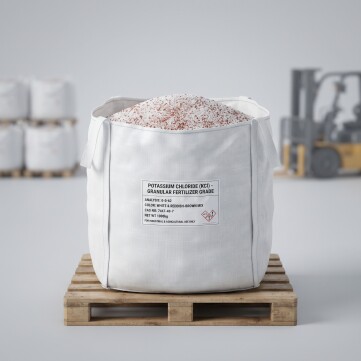
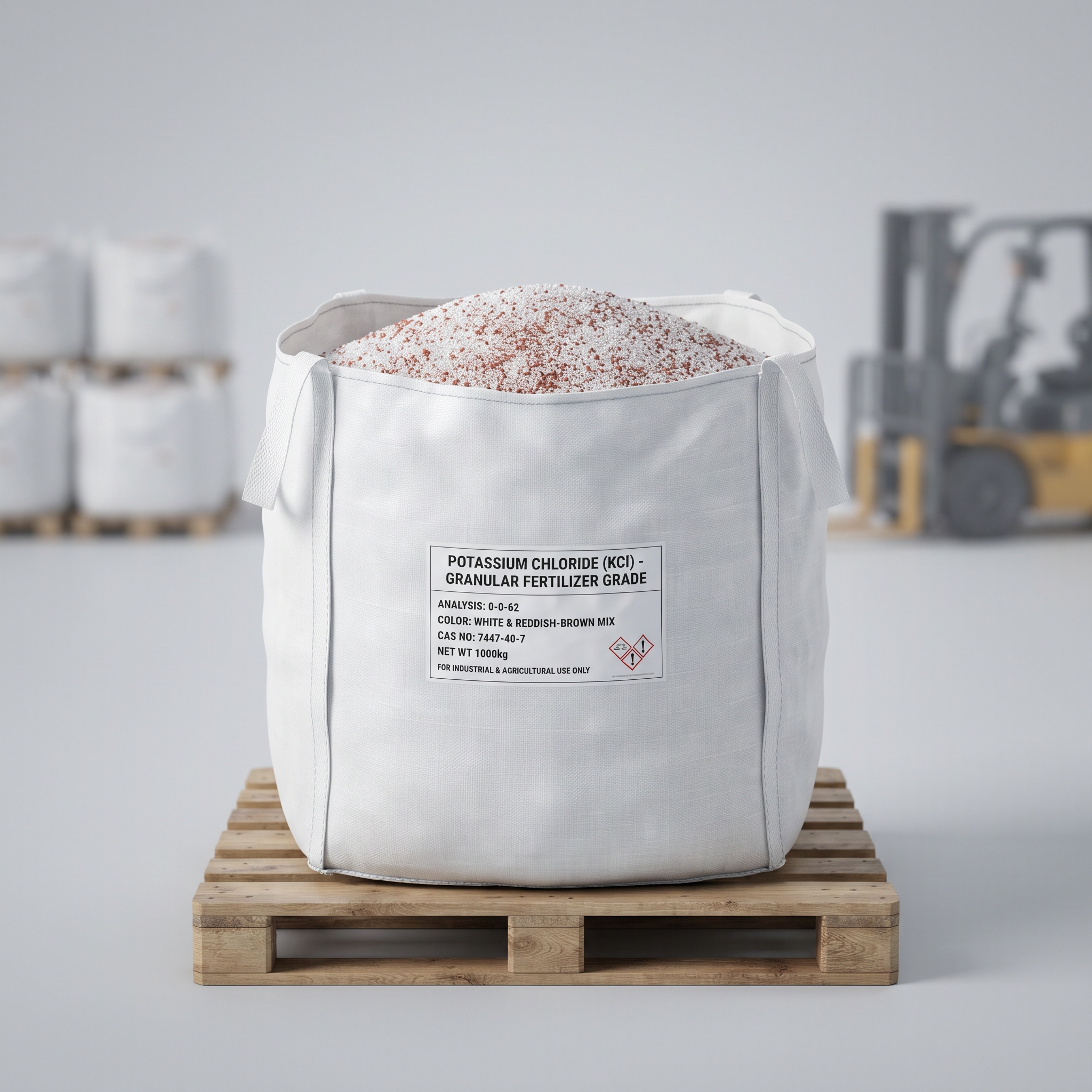
Potassium chloride is a free-flowing crystalline product of white, grayish-white, or various shades of reddish-brown color. The potassium mass fraction calculated as potassium oxide is at least 60 percent for the granular grade and at least 60.5 percent for the fine grade. The water mass fraction does not exceed 0.5 percent for the granular product and 0.2 percent for the fine product. The granulometric composition of the granular grade requires a fraction of 1 to 4 mm at not less than 95 percent, a fraction below 1 mm at not more than 5 percent, and no particles above 6 mm. Granule dynamic strength is at least 80 percent, and flowability is 100 percent. Potassium chloride is readily soluble in water, has a melting point of 770 degrees Celsius, and a density of about 1.98 g/cm3.
Technical Grades and Supply Forms
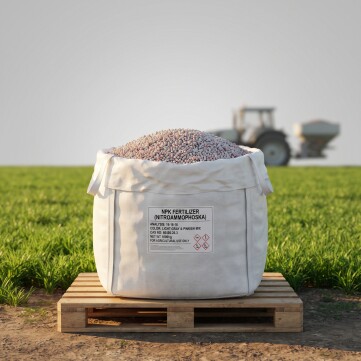
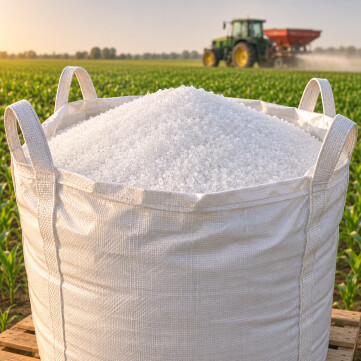
Under GOST 4568-95, potassium chloride is produced in two main grades: Granular and Fine, each divided into classes. The Granular grade is intended for direct soil application and fertilizer blend production; the Fine grade is used for complex mineral fertilizer production, direct soil application, and industrial applications. The product is supplied in bulk in rail cars and sea bulkers, in big bags of 1000 kg capacity, and in small packaging for retail trade. Typical bulk shipments start from one tonne; for sea shipments, from 3000 tonnes.
Regulatory Framework
In the EAEU region, quality of potassium chloride is governed by GOST 4568-95 Potassium Chloride. Specifications, which covers the product obtained by processing potassium ores and intended for agriculture, retail trade, and industry. The product, as a mineral fertilizer, is subject to conformity declaration under the EAEU technical regulation on requirements for mineral fertilizers, which sets radiation and chemical safety norms, marking, and packaging rules. For customs purposes, the explanatory notes to HS heading 3104 apply.
Mechanism of Action and Functional Role
In agriculture, potassium contained in potassium chloride regulates cell water balance, participates in enzyme activation, protein and carbohydrate synthesis, and increases plant resistance to drought, frost, and diseases. The chloride ion accompanying potassium is not hazardous to most crops in moderate doses; however, chlorine-sensitive crops (potatoes, berries, citrus) require chlorine-free forms. In the oil and gas industry, potassium chloride is used as an inhibiting component of drilling fluids, reducing filtration and improving wellbore stability, as well as in hydraulic fracturing compositions. In the chemical industry, it serves as feedstock for electrolysis to produce potassium hydroxide and chlorine.
Applications by Industry
Agriculture consumes the largest share of potassium chloride for basal application to cereals, industrial crops, and vegetables, as well as for the production of complex nitrogen-phosphorus-potassium fertilizers. The granular grade is preferred for direct application and fertilizer blends due to good flowability and uniform distribution. The oil and gas industry uses potassium chloride for preparing drilling fluids and workover fluids. The chemical industry applies the product to produce potassium hydroxide, chlorine, and other compounds, as well as an electrolyte and catalyst component. In the production of leather substitutes, synthetic rubber, and feed yeast, specific grades of potassium chloride are used.
Comparison with Alternative Materials
Compared with potassium sulfate, potassium chloride contains a higher potassium oxide concentration (60-60.5 percent versus 45-50 percent) and has a lower cost, but contains chlorine, which is undesirable for chlorine-sensitive crops. Compared with potassium nitrate, potassium chloride provides higher potassium content but does not contain nitrogen and is not suitable for chlorine-sensitive crops. In industrial applications, potassium chloride is often a more cost-effective alternative to other potassium salts due to availability and established production technology.
Typical Processing Errors
- Storing potassium chloride under high humidity without protection from atmospheric precipitation, leading to caking and loss of flowability.
- Mixing potassium chloride with ammonium nitrate or other components without considering compatibility, which may cause a chemical reaction or impair the physical properties of the fertilizer blend.
- Applying potassium chloride to chlorine-sensitive crops without considering agronomic restrictions.
- Using contaminated product or product with elevated moisture for preparing drilling fluids, reducing inhibition efficiency.
- Violating the tightness of big bags during storage on open platforms, leading to wetting and product spoilage.
- Neglecting granulometric composition control when using the granular grade in fertilizer blends, which may lead to component segregation.
Quality Control and Laboratory Methods
Incoming inspection of potassium chloride includes determination of appearance and color, potassium mass fraction calculated as potassium oxide, water mass fraction, granulometric composition, granule dynamic strength, and flowability. Potassium content is determined by titrimetric or photometric method. For industrial applications, chloride, sulfate, and insoluble residue content may be controlled. Test methods are governed by GOST 4568-95 and relevant analysis standards.
Storage and Transportation Conditions
Potassium chloride is stored in closed warehouses excluding atmospheric precipitation and groundwater ingress. Product packaged in big bags may be stored on open platforms with hard surfacing and under shelters. The guaranteed shelf life is 6 months from the date of manufacture. Potassium chloride is not classified as dangerous goods for transport, simplifying logistics. Transportation is carried out by rail, road, river, and sea transport in accordance with cargo transport rules. For sea shipments, bulk transport in bulkers or big bags in containers is used.
Finding Analogues and Interchangeability
When selecting an analogue for potassium chloride, the key criteria are potassium oxide content, presence or absence of chlorine, granulometric composition, and application. For chlorine-sensitive crops, potassium chloride can be replaced by potassium sulfate or potassium nitrate with dosage adjustment. For industrial applications, replacement is possible provided the chemical composition and product purity meet requirements. In fertilizer blend production, granular potassium chloride can be partially replaced by the fine grade with adjustment of the mixing technology. Direct substitution without consideration of agronomic or technological requirements is not recommended.
Supply Scheme
For industrial buyers, potassium chloride is available worldwide through the apptrade.ru platform. Shipments can be organized from producing regions across different continents, with logistics and customs support adapted to the destination market. International sourcing allows buyers to balance cost and lead time depending on batch size and logistical distance, especially for bulk sea shipments.
Logistics and Customs Clearance
Potassium chloride is transported by sea, rail, and road. For large batches, bulk transport in sea bulkers is economically viable; for medium and small volumes, big bags and containers are used. When imported into the EAEU, products are classified under HS heading 3104. As potassium chloride is not dangerous goods, special dangerous goods packaging and marking requirements do not apply; however, phytosanitary and sanitary norms must be observed. The portal customs broker prepares declarations, confirms classification codes, and manages non-tariff regulation procedures.
FAQ
What is the difference between granular and fine potassium chloride?
Granular potassium chloride has a particle size predominantly from 1 to 4 mm, offers good flowability, and is intended for direct soil application and fertilizer blend production. Fine potassium chloride consists of smaller crystals or grains and is used mainly for complex fertilizer production and industrial purposes.
Can potassium chloride be used for all crops?
Potassium chloride is suitable for most agricultural crops; however, for chlorine-sensitive crops (potatoes, berries, citrus, tobacco), its use is limited or requires caution. For such crops, chlorine-free potassium fertilizers such as potassium sulfate are preferred.
Is potassium chloride classified as dangerous goods for transport?
No, potassium chloride is not classified as dangerous goods for transport. It does not require special permits or dangerous goods marking, simplifying logistics and storage.
What is the shelf life of potassium chloride?
The guaranteed shelf life of potassium chloride is 6 months from the date of manufacture under storage conditions in closed warehouses or under shelters in big bags. After expiry, the product must undergo laboratory testing before use.
Is special packaging required for potassium chloride transportation?
Special dangerous goods packaging is not required. Potassium chloride is transported in bulk in rail cars and sea bulkers, in big bags, or in small packaging. Packaging must protect against moisture and contamination.
What is the difference between potassium chloride and potassium nitrate?
Potassium chloride contains 60-60.5 percent potassium oxide and chlorine but no nitrogen. Potassium nitrate contains about 44 percent potassium oxide and 13 percent nitrogen, is chlorine-free, and is suitable for chlorine-sensitive crops and foliar feeding.
Conclusion
Potassium chloride remains a foundational potassium fertilizer and multifunctional industrial feedstock due to its high nutrient concentration, availability, and established regulatory framework. For industrial buyers, critical factors include batch-to-batch consistency, especially potassium oxide content and moisture, correct customs classification, and compliance with storage conditions to prevent caking. The apptrade.ru portal organizes the full supply cycle, from grade selection for an agronomic or industrial task to customs clearance and delivery to the manufacturing site.
Contact Us
For procurement inquiries, technical documentation, and logistics coordination, contact the apptrade.ru team at info@apptrade.ru.