
















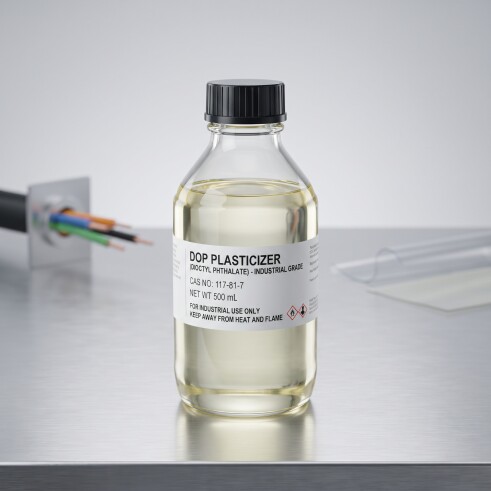
DOP Plasticizer
DOP Plasticizer: Technical Overview for Industrial Applications
DOP plasticizer (dioctyl phthalate, di(2-ethylhexyl) phthalate) is an ester of orthophthalic acid and 2-ethylhexanol. In industrial practice, DOP is one of the most widely used general-purpose plasticizers for polyvinyl chloride and other polar polymers. Its primary function is to lower the glass transition temperature of the polymer, imparting flexibility, elasticity, and low-temperature resistance without altering its chemical nature. DOP is also used as a flushing fluid for injection molding machines and as a component of lubricating compositions.
Chemical Identification
DOP is identified by CAS 117-81-7, empirical formula C24H38O4, relative molecular mass 390.56. Chemical name: bis(2-ethylhexyl) phthalate, di-2-ethylhexyl orthophthalate. In international trade, it is classified under HS heading 2917 32 000 0 as dioctyl orthophthalates. Synonyms include dioctyl phthalate and bis(2-ethylhexyl) phthalate. DOP is assigned to hazard class 3 for health effects as a moderately hazardous substance.
Physicochemical Properties
DOP is a colorless or slightly yellowish transparent oily liquid with a mild fruity odor. Density at 20 degrees Celsius is 0.982-0.986 g/cm3. Boiling point is 386 degrees Celsius at atmospheric pressure or 229 degrees Celsius at a residual pressure of 4.5 mm Hg. Flash point is 205 degrees Celsius in a closed cup, ignition temperature 238 degrees Celsius, pour point minus 54 degrees Celsius. Refractive index at 20 degrees Celsius is 1.486-1.488. Acid number is not more than 0.07 mg KOH/g. Volatile matter content is not more than 0.1 percent. DOP is insoluble in water and miscible with gasoline, mineral oils, and most organic solvents.
Technical Grades and Supply Forms
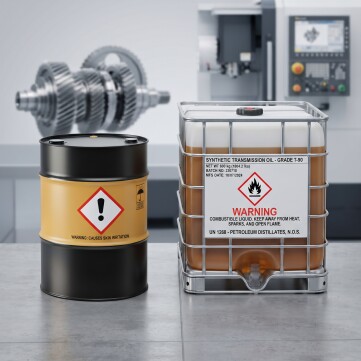
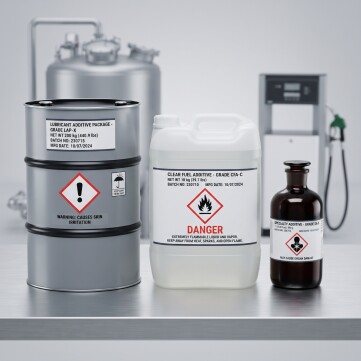
DOP plasticizer is produced under GOST 8728-88 with amendments in grades differing in color and main substance content. The product is supplied in steel drums of 210 kg, intermediate bulk containers of 1000 kg, rail and road tank cars, and tank containers. Typical bulk shipments start from one tonne. DOP can also be supplied in smaller packaging for laboratory and pilot-scale needs.
Regulatory Framework
In the EAEU region, quality is governed by GOST 8728-88 Plasticizers. Specifications. The standard covers plasticizers - esters of various alcohols and dicarboxylic acids intended for plasticizing vinyl resins and other polymers. Packaging, marking, transportation, and storage are regulated by GOST 1510. For customs purposes, the explanatory notes to HS heading 2917 32 000 0 apply.
Mechanism of Action and Functional Role
DOP molecules penetrate between polymer macromolecules such as polyvinyl chloride and weaken intermolecular interactions, leading to a decrease in glass transition temperature and increased segmental mobility. As a result, the material acquires flexibility, elasticity, and elongation capability while maintaining strength. DOP has low volatility and good light stability, ensuring the durability of plasticized products. It also provides good insulating properties and is almost resistant to migration. Compatibility with the polymer is determined by the solubility parameter and polarity.
Applications by Industry
The main volume of DOP is consumed in the production of flexible PVC products: cables and wires, floor coverings, roofing membranes, pipes, hoses, artificial leather, shoe soles, packaging films, and household items. In construction, DOP is used in polymer building materials and sealants. In the automotive industry, it is used in interior trim, seals, and cable insulation. DOP is also employed as a flushing fluid for injection molding machines in polyurethane production and as a component of metalworking fluids.
Comparison with Alternative Materials
Compared with dibutyl phthalate, DOP has lower volatility and better compatibility with polyvinyl chloride, making it preferable for durable products. Compared with diisononyl phthalate and diisodecyl phthalate, DOP has somewhat higher volatility but remains the most cost-effective general-purpose plasticizer. Due to tightening environmental requirements in the European Union and several other regions, there is a shift toward dioctyl terephthalate and diisononyl phthalate, which are considered safer alternatives. However, DOP retains a dominant position in many markets due to established formulations and availability.
Typical Processing Errors
- Using DOP with elevated acid number or moisture content, leading to PVC degradation and defects in the product.
- Insufficient compatibility of DOP with certain polar polymers such as polyamides, causing plasticizer exudation to the surface.
- Exceeding the recommended plasticizer dosage, which can reduce mechanical strength and increase brittleness at low temperatures.
- Storing DOP in non-sealed containers or in contact with moisture, promoting ester hydrolysis and an increase in acid number.
- Using DOP in products contacting food or skin without considering regulatory restrictions.
- Working with DOP without personal protective equipment in case of spillage.
Quality Control and Laboratory Methods
Incoming inspection of DOP includes determination of appearance and color on the Hazen scale, density at 20 degrees Celsius, refractive index, acid number by titration, volatile matter content by drying, saponification number, main substance content by gas chromatography or titration, water content by the Karl Fischer method, and flash point in a closed cup. Color on the platinum-cobalt scale after heating is also regulated. Volume electrical resistivity is tested for cable compounds.
Storage and Transportation Conditions
DOP is stored in sealed containers in ventilated warehouses at temperatures from minus 40 to plus 40 degrees Celsius, protected from direct sunlight and moisture. The guaranteed shelf life is typically 12 months from the date of manufacture, but can be extended after laboratory testing. DOP is not classified as dangerous goods for transport, which simplifies logistics. Transportation is carried out by all modes of transport in accordance with cargo transport rules applicable to the respective mode.
Finding Analogues and Interchangeability
When selecting an analogue for DOP, the key criteria are compatibility with the specific polymer, volatility, pour point, color, and cost-effectiveness. For products requiring enhanced low-temperature flexibility, adipate or azelate plasticizers may be used. To reduce volatility and improve sanitary-hygienic characteristics, high-molecular-weight phthalates or terephthalates are employed. Partial replacement of DOP with diisononyl phthalate is possible in PVC formulations after adjusting the dosage and testing the final product. Direct substitution without preliminary testing is not recommended.
Supply Scheme
For industrial buyers, DOP plasticizer is available worldwide through the apptrade.ru platform. Shipments can be organized from producing regions across different continents, with logistics and customs support adapted to the destination market. International sourcing allows buyers to balance cost and lead time depending on batch size and logistical distance.
Logistics and Customs Clearance
DOP is transported by sea, rail, and road. For large batches, sea tank containers or dedicated tankers are economically viable; for medium and small volumes, intermediate bulk containers and steel drums are used. When imported into the EAEU, products are classified under HS heading 2917 32 000 0. The portal customs broker prepares declarations, confirms classification codes, and manages non-tariff regulation procedures where applicable.
FAQ
What is the difference between DOP and dibutyl phthalate?
DOP has a longer alkyl chain of eight carbon atoms versus four in dibutyl phthalate, providing lower volatility and better compatibility with PVC. DOP is preferred for durable products, while dibutyl phthalate is more often used in fast-drying paints and adhesives.
Can DOP be used for food packaging?
In most countries, including the EAEU and the European Union, DOP use is restricted for food-contact materials due to potential migration risk. For such applications, alternative plasticizers are recommended after verifying compliance with sanitary norms.
What hazard class is assigned to DOP?
DOP is hazard class 3 for health effects as a moderately hazardous substance. For transport, it is not classified as dangerous goods; special permits are not required.
How long can DOP be stored?
The guaranteed shelf life of DOP is typically 12 months from the date of manufacture under proper storage conditions: sealed container, protection from moisture and direct sunlight. After expiry, the product must undergo laboratory testing before use.
Is special packaging required for DOP transportation?
Standard sealed packaging is sufficient for DOP: steel drums, intermediate bulk containers, tank cars. Special dangerous goods packaging requirements do not apply because DOP is not dangerous goods for transport.
What is the difference between DOP and dioctyl terephthalate?
DOP is an orthophthalic acid ester, while dioctyl terephthalate is a terephthalic acid ester. Dioctyl terephthalate is considered a more environmentally friendly alternative to DOP because it is not an orthophthalate, which faces regulatory restrictions in several countries. It has similar plasticizing properties but differs somewhat in pour point and volatility.
Which polymers are compatible with DOP?
DOP is well compatible with PVC, vinyl chloride copolymers, cellulose nitrate, polystyrene, rubbers, and certain other polar polymers. It is incompatible with polyolefins such as polyethylene and polypropylene, and polyamides due to polarity differences.
Conclusion
DOP plasticizer remains one of the most in-demand general-purpose plasticizers for PVC and other polymers due to its optimal balance of properties, availability, and established regulatory framework. For industrial buyers, critical factors include batch-to-batch consistency, especially color and acid number, correct customs classification, and compliance with storage conditions. The apptrade.ru portal organizes the full supply cycle, from grade selection for a formulation to customs clearance and delivery to the manufacturing site.
Contact Us
For procurement inquiries, technical documentation, and logistics coordination, contact the apptrade.ru team at info@apptrade.ru.