















Toluene
Petroleum Toluene: Technical Overview for Industrial Applications
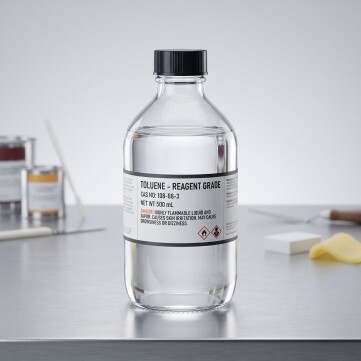
Toluene (methylbenzene, C7H8) is an aromatic hydrocarbon produced by catalytic reforming of gasoline fractions or pyrolysis of petroleum products. In industrial practice, toluene occupies a stable niche as feedstock for organic synthesis, a solvent in the coatings industry, and a component of high-octane fuel additives. Its primary role is to provide the feedstock base for polyurethane production via toluene diisocyanate (TDI) and to dissolve film-forming substances without altering the target properties of the final product.
Chemical Identification
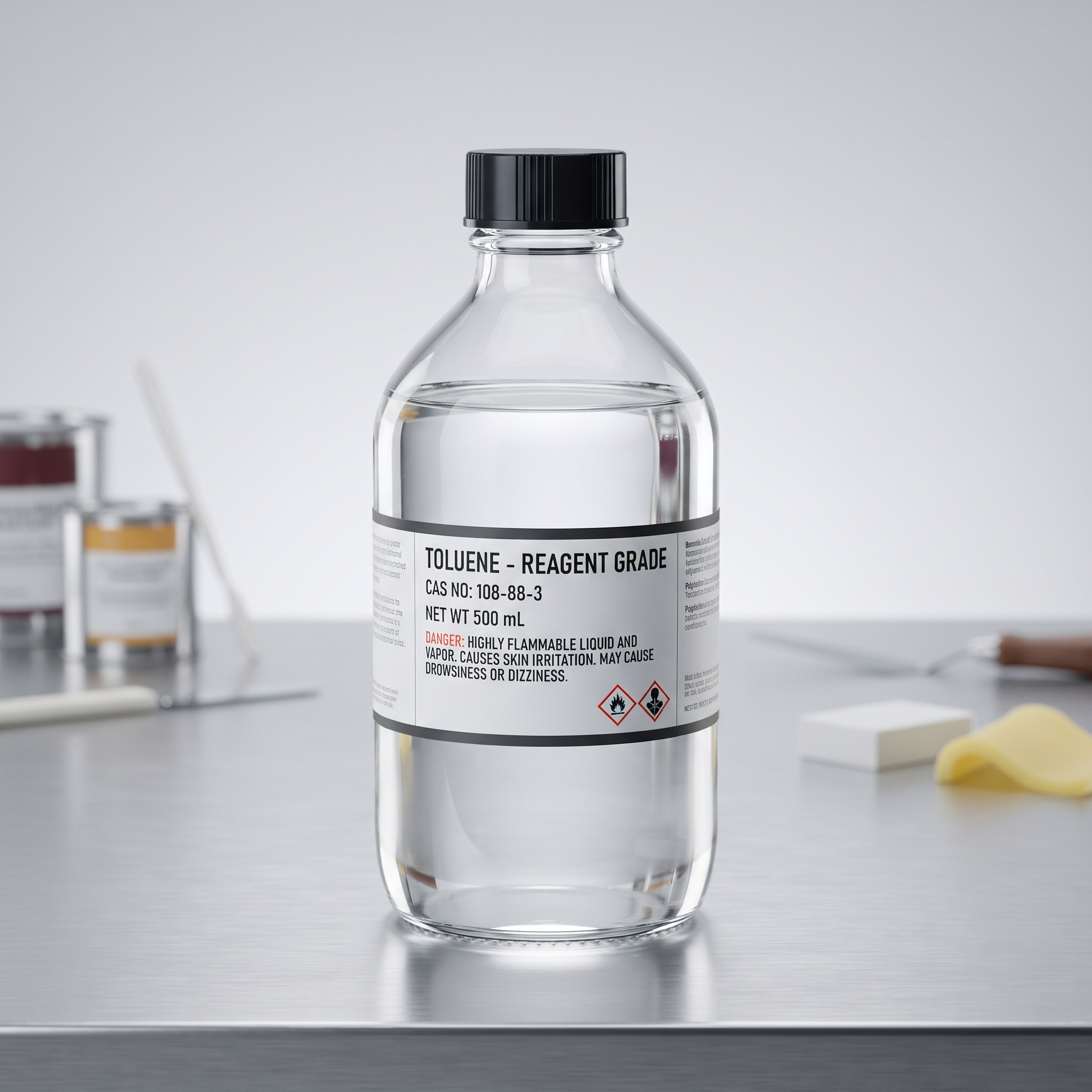
Toluene is identified by CAS 108-88-3, empirical formula C7H8, relative molecular mass 92.14. In international trade, it is classified under HS heading 2902 30 as a cyclic aromatic hydrocarbon. Synonyms include methylbenzene, phenylmethane, and toluol. Toluene is assigned to hazard class 3 for health effects (moderately hazardous substance).
Physicochemical Properties
Toluene is a colorless transparent liquid with a characteristic odor. Density at 20 degrees Celsius is 0.865-0.867 g/cm3 for the highest grade and 0.864-0.867 g/cm3 for the first grade. The boiling point of pure toluene is 110.6 degrees Celsius, melting point minus 95 degrees Celsius. Flash point in a closed cup is 4 degrees Celsius, autoignition temperature 536 degrees Celsius. Explosive limits in air are 1.3 percent (lower) and 6.7 percent (upper) by volume. Solubility in water is very low; toluene is miscible with most organic solvents.
Technical Grades and Supply Forms
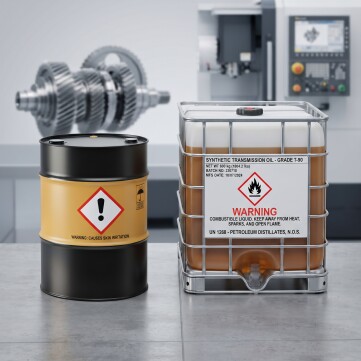
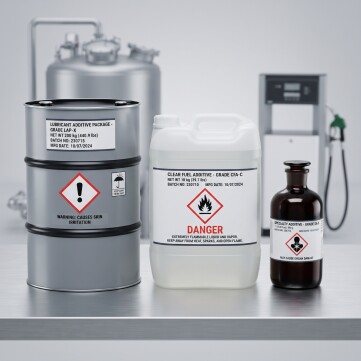
Petroleum toluene is produced under GOST 14710-78 in two grades: highest (OKP 24 1421 0110) and first (OKP 24 1421-0130). The highest grade contains at least 99.75 percent toluene; the first grade at least 99.6 percent. The product is supplied in rail and road tank cars, steel drums, intermediate bulk containers, and tank containers. Typical B2B shipments start from one tonne.
Regulatory Framework
In the EAEU region, quality is governed by GOST 14710-78. The standard corresponds to ISO 5272-79 for appearance, density, sulfuric acid color, total sulfur, benzene, and non-aromatic hydrocarbons. Packaging, marking, transportation, and storage are regulated by GOST 1510. For customs purposes, the explanatory notes to HS heading 2902 30 apply.
Mechanism of Action and Functional Role
In chemical synthesis, toluene serves as feedstock for toluene diisocyanate (TDI), which is further used in polyurethane foams, coatings, sealants, and elastomers. Toluene is also a precursor for benzoic acid and other organic compounds. As a solvent, toluene physically dissolves alkyd, epoxy, and polyurethane resins by penetrating between polymer macromolecules and disrupting intermolecular bonds. After application, toluene evaporates at a controlled rate without chemically reacting with the film former.
Applications by Industry
The coatings industry consumes a significant share of toluene as a solvent for alkyd, epoxy, and polyurethane materials, and in thinners and removers. The petrochemical sector uses toluene for TDI synthesis and polyurethane production. The fuel industry applies toluene as a high-octane additive to motor fuels. In printing, toluene is a component of ink solvents and wash solutions. In synthetic fiber and polymer production, toluene is used as a solvent and intermediate feedstock.
Comparison with Alternative Materials
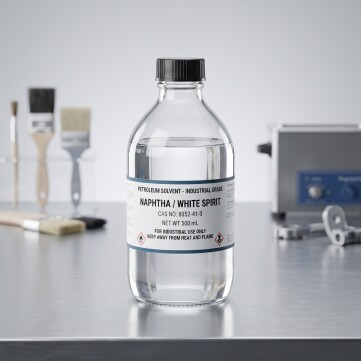
Compared with benzene, toluene is less toxic (hazard class 3 versus class 2 for benzene) and has a higher boiling point, reducing volatility and the risk of explosive mixtures. Compared with xylene, toluene offers somewhat higher solvency and shorter evaporation time, though xylene is less toxic in several respects. Compared with aliphatic solvents such as naphtha or white spirit, toluene provides higher solvency for resins but requires stricter ventilation control and personal protective equipment.
Typical Processing Errors
- Using toluene in unventilated enclosed spaces without respiratory and skin protection.
- Mixing toluene with oxidizers such as nitric acid or peroxides, which may cause an exothermic reaction.
- Storing drums under direct sunlight or near heat sources, leading to pressure buildup and leaks.
- Applying toluene to waterborne paints, causing dispersion coagulation.
- Using product past its shelf life without prior laboratory verification of main substance content and impurities.
- Working with toluene without equipment grounding, creating a risk of static electricity accumulation.
Quality Control and Laboratory Methods
Incoming inspection of petroleum toluene includes determination of appearance and color (GOST 2706.1-74), density at 20 degrees Celsius (hydrometer or pycnometer under GOST 3900-85), distillation limits (GOST 2706.13-74), toluene content and impurities by gas chromatography (GOST 2706.2-74), sulfuric acid color (GOST 2706.3-74), copper strip test, aqueous extract reaction (GOST 2706.7-74), evaporability (GOST 2706.8-74), and total sulfur content. Benzene and non-aromatic hydrocarbon content are regulated separately for each grade.
Storage and Transportation Conditions
Toluene is a flammable liquid. The closed-cup flash point is 4 degrees Celsius, corresponding to hazard class 3 under GOST 12.1.007. Storage is in sealed containers in ventilated warehouses, protected from direct sunlight and kept away from oxidizers and ignition sources. In storage and application areas, open flames and spark-producing tools are prohibited. The guaranteed shelf life of toluene under GOST 14710-78 is six months from the date of manufacture. Transportation is possible by all modes of transport in compliance with dangerous goods regulations: UN 1294, class 3, packing group II.
Finding Analogues and Interchangeability
When selecting an analogue for toluene, the key criteria are solvency (aniline point, solubility parameter), flash point, toxicity, and compatibility with the formulation. Xylene can partially replace toluene in coating formulations, but this alters evaporation rate and may affect film quality. In chemical synthesis, replacing toluene requires revalidation of catalysts and process conditions. Direct substitution without preliminary testing is not recommended.
Supply Scheme
For industrial buyers, petroleum toluene is available worldwide through the apptrade.ru platform. Shipments can be organized from producing regions across different continents, with logistics and customs support adapted to the destination market. International sourcing allows buyers to balance cost and lead time depending on batch size and logistical distance.
Logistics and Customs Clearance
Toluene is transported by sea, rail, and road. For large batches, sea tank containers or dedicated tankers are economically viable; for medium and small volumes, intermediate bulk containers and steel drums are used. When imported into the EAEU, products are classified under HS heading 2902 30, requiring accurate description of product purity. The portal customs broker prepares declarations, confirms classification codes, and manages non-tariff regulation procedures where applicable.
FAQ
What is the difference between toluene and benzene?
Toluene (C7H8) contains a methyl group, is less toxic (hazard class 3), and has a boiling point of 110.6 degrees Celsius. Benzene (C6H6) has no side chain, is more toxic and carcinogenic (hazard class 2), and boils at 80.1 degrees Celsius.
Can toluene be used to thin waterborne paints?
No. Toluene is incompatible with aqueous systems and may cause dispersion coagulation. It is intended for solvent-borne materials.
What hazard class is assigned to toluene?
Petroleum toluene is hazard class 3 for health effects (moderately hazardous). For transport, it is class 3 flammable liquid, UN 1294.
How long can toluene be stored?
The guaranteed shelf life of toluene under GOST 14710-78 is six months from the date of manufacture. After expiry, the product must undergo laboratory testing before use.
Is special packaging required for transportation?
Yes. For class 3 dangerous goods, packaging must withstand internal pressure and comply with ADR requirements. Hazard labels are applied in accordance with GOST 19433.
What is the difference between highest and first grade toluene?
Highest grade toluene contains at least 99.75 percent main substance; first grade contains at least 99.6 percent. The highest grade also has stricter limits for benzene and non-aromatic hydrocarbons.
Conclusion
Petroleum toluene remains a foundational petrochemical intermediate and industrial solvent due to its predictable quality, established regulatory framework, and availability. For B2B buyers, critical factors include batch-to-batch consistency, correct customs classification, and compliance with dangerous goods transport rules. The apptrade.ru portal organizes the full supply cycle, from grade selection for a specific process to customs clearance and delivery to the manufacturing site.
Contact Us
For procurement inquiries, technical documentation, and logistics coordination, contact the apptrade.ru team at info@apptrade.ru.