















Conductive FTO Glass 2.1 mm for Industrial Projects
Conductive FTO glass for industrial purchasing
FTO glass combines a transparent glass substrate with an electrically conductive coating. This product has a nominal thickness of 2.1 mm and a sheet format of 2000 x 1400 mm. It is offered for industrial development, glass processing and the manufacture of functional components. Purchasing can begin with sheets for evaluation before a larger production requirement is agreed.
Material identity and terminology
The coating is fluorine doped tin oxide, written as SnO2:F. FTO belongs to the transparent conductive oxide family, commonly abbreviated as TCO. These terms describe the coating material and its broader functional category. A CAS number for an individual chemical constituent should not be presented as a unique identifier for the complete coated glass article. Customs classification must follow the supplied condition and applicable requirements.
Electrical and optical characteristics
Reported sheet resistance is approximately 30 ohms per square. Reported light transmission is 85 percent, based on a production measurement. These figures provide an initial selection basis, not an unrestricted performance guarantee. Projects requiring a maximum resistance, a minimum transmission or a defined uniformity tolerance should specify those requirements before ordering. The measurement method and acceptance criteria can then be discussed.
Sheet format and processing options
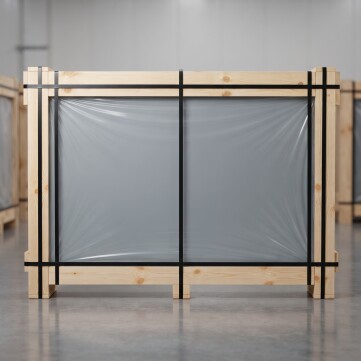
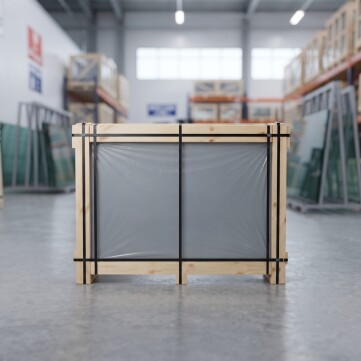
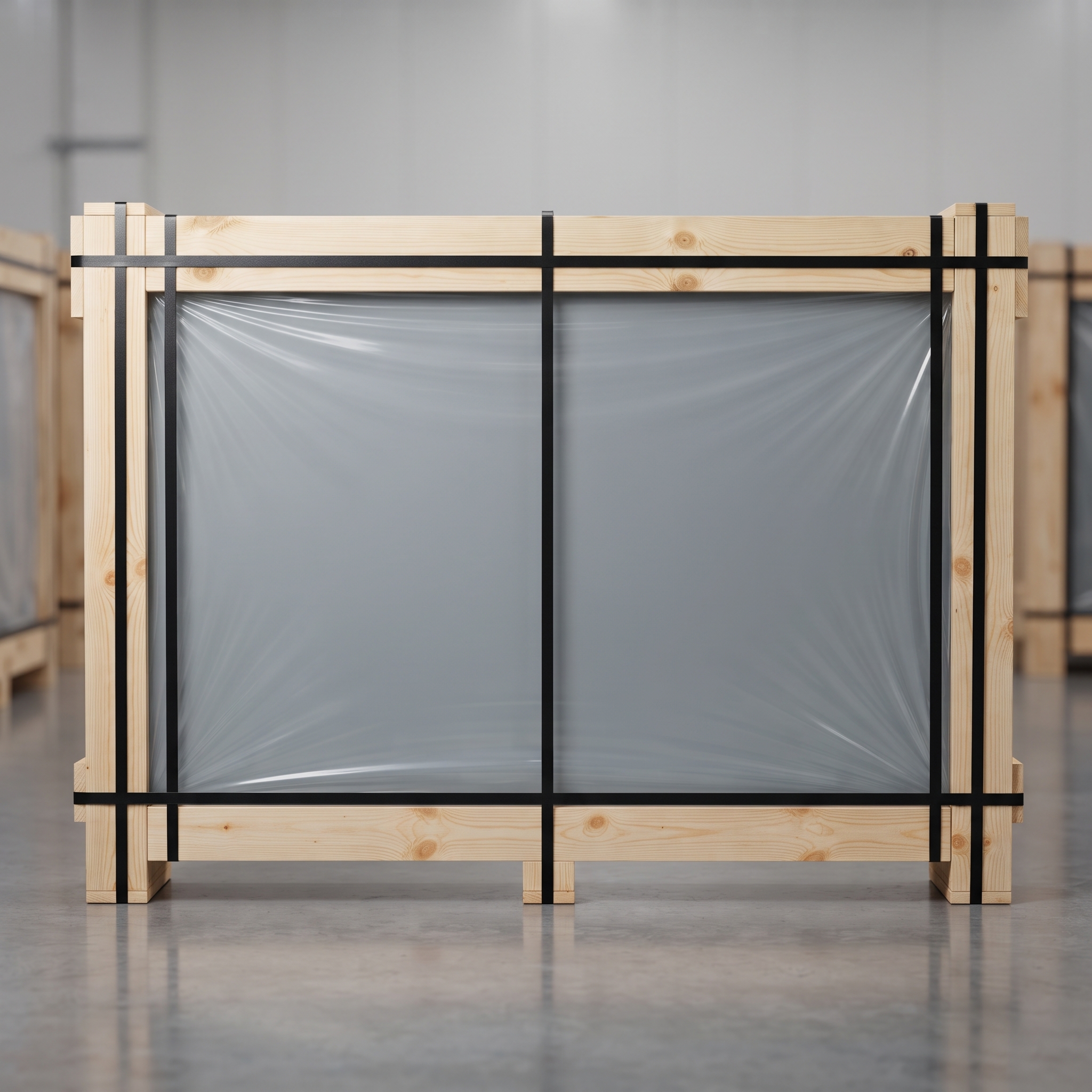
The available sheet size is 2000 x 1400 mm at a nominal thickness of 2.1 mm. Wooden cases protect the material during handling and dispatch. Sheets and case quantities can be discussed according to the available stock. Cutting and edge grinding are available by agreement. Submit a component schedule so that dimensions, quantities, edge requirements and processing feasibility can be reviewed together.
Standards and acceptance requirements
Acceptance should be based on the agreed product specification and available batch documentation. Optical measurements may be specified with reference to ISO 9050 where appropriate. Mentioning a test standard does not establish certification of the supplied batch. Any mandatory construction, equipment or project requirements must be identified before purchase. Available documents should be checked against the intended application rather than assumed from the general material name.
For a purchasing team, the sheet format and processing scope matter alongside electrical data. A full sheet order and a component order involve different preparation work. Comparing both options can help identify the appropriate procurement route. Any drawing should distinguish finished dimensions from starting blanks and state whether the customer will perform further processing. This prevents assumptions about what is included in the supplied item.
How the conductive coating works
The hard coating is deposited by chemical vapour deposition, or CVD. Its electrical conductivity allows the transparent surface to function as an electrode. With an appropriately designed electrical connection, the coating can also form part of a resistive heating assembly. Heat output depends on the complete circuit, component geometry and operating conditions. The sheet itself is not a finished heater or a ready connection system.
Applications in industrial products
Potential projects include transparent electrodes, electrochromic development, heated glazing, refrigeration equipment and experimental multilayer structures. Each application requires its own qualification. For insulating glass manufacturers, this material is a component for evaluating special constructions, not an automatic replacement for every architectural glass specification. The 2.1 mm substrate must be assessed against the mechanical and safety requirements of the finished assembly.
Comparison with alternative materials
FTO and ITO are different conductive oxides. Selection should compare actual sheet resistance, optical performance, processing compatibility and the completed manufacturing cycle. Architectural low emissivity glass must additionally be assessed through its thermal properties. An electrically conductive coating alone does not establish a specific emissivity value. This product should not be substituted for a specified silver based coating without a project review.
Processing mistakes to avoid
- Assuming that the resistance of every sheet is identical without agreed measurement criteria.
- Starting production without checking which surface carries the conductive coating.
- Dragging metal tools or contaminated handling equipment across the functional surface.
- Using abrasive cleaning methods without checking their compatibility.
- Applying an unverified heat treatment or strengthening cycle to the full order.
- Assuming that sheet conductivity proves compliance of a complete heating system.
Quality control and measurement
Relevant checks include dimensions, thickness, visible surface condition, light transmission and sheet resistance. A handheld meter can help identify the conductive side, but it does not replace a defined sheet resistance measurement procedure. Batch measurement results are available on request. Where uniformity matters, agree the sampling positions, number of readings and acceptance limits before ordering. Additional testing is subject to separate agreement.
Storage and handling
Keep packaged glass in a dry, protected storage area and prevent contact with dirt or abrasive particles. Follow the packaging orientation and handling instructions agreed for the consignment. Lifting arrangements must account for package weight and stability. Do not assign an arbitrary storage temperature, humidity limit or shelf life without supporting instructions. Inspect packaging and accessible surfaces at receipt and record any transport damage.
The relationship between conductivity and low emissivity should be treated carefully. Some conductive oxide products serve both functions, but the performance of one grade cannot be assigned to another grade without evidence. If thermal insulation is the main objective, include emissivity and complete glazing requirements in the enquiry. If electrical operation is the main objective, focus first on resistance, geometry and process compatibility. Both routes can use transparent coated glass, but the acceptance criteria are not identical.
Choosing an equivalent product
An equivalent must match the functions required by the project. Compare substrate thickness, usable dimensions, resistance, transmission, surface quality and compatibility with subsequent layers. For thermal processes, evaluate samples after the intended cycle. For architectural uses, request the relevant thermal information. Similar names do not establish interchangeability, and a material that suits an electrode prototype may not suit a finished glazing unit.
Supply for worldwide projects
Enquiries for worldwide projects can cover evaluation sheets, processing requirements and larger purchasing quantities. Availability, order size and preparation time are confirmed for each request. A forecast of recurring demand helps distinguish a prototype order from a production programme. No unrestricted commitment to worldwide delivery or future quantities is implied; the actual supply scope is established in the commercial offer.
Logistics and customs coordination
The transport arrangement is selected for the consignment rather than assumed in advance. Road, rail, sea or multimodal options may be reviewed where applicable. Packaging, lifting access, unloading responsibility and insurance requirements should be settled before dispatch. Freight coordination, customs brokerage and any financial arrangements are separate matters for agreement. They are not automatically included in a glass supply or processing order.
Purchasing information for a useful quotation
Provide the intended application, sheet or component dimensions, quantity and required processing. Add any resistance limits, optical requirements and planned thermal exposure. For heating projects, include supply voltage and target output. For multilayer devices, describe the later process stages. This information supports a relevant proposal and avoids comparing quotations for different specifications or different levels of preparation.
Frequently asked questions
Can this glass be ordered for an initial trial?
Evaluation quantities can be discussed before a larger purchase. Confirm the required format and available quantity when enquiring.
Can components be cut to size?
Cutting and edge grinding are available by agreement. Send dimensions, quantities and edge requirements for a feasibility review.
Is 30 ohms per square a guaranteed maximum?
No guaranteed upper limit is established here. Approximately 30 ohms per square is the reported selection value; contractual limits require confirmation.
Is the coating suitable for heat treatment?
Processing conditions must be checked for this material. Evaluate samples before committing the complete order to a new thermal cycle.
Can it replace architectural low emissivity glass?
Only after reviewing the relevant thermal, optical, mechanical and safety requirements. Electrical conductivity alone is not a complete architectural specification.
Industrial purchasing summary
The offer centres on a defined sheet format, a hard conductive coating and preparation options for industrial projects. Selection should connect the reported characteristics with the intended manufacturing process. A qualified trial provides a practical basis for deciding whether the material meets the requirements of a subsequent production order.
Contact Us
info@apptrade.ru