NPK Fertilizer (Nitroammophoska)
NPK Fertilizer: Technical Overview for Agro-Industrial Applications
NPK fertilizer (nitroammophoska) is a high-analysis complex granular fertilizer containing three main nutrients: nitrogen, phosphorus, and potassium. In the agro-industrial complex, NPK fertilizer occupies a leading position among complex fertilizers due to its balanced composition and the ability to simultaneously supply plants with all essential macronutrients. Its primary function is to replenish nitrogen, phosphorus, and potassium deficiencies in the soil in an optimal ratio, which is especially important for crops with high nutritional requirements. NPK fertilizer also serves as a basis for preparing fertilizer blends and can be applied on various soil types under a wide range of agricultural crops.
Chemical Identification
NPK fertilizer is not a single chemical compound. It is a multicomponent mixture of salts, including ammonium and nitrate forms of nitrogen, ammonium phosphates, and potassium salts (typically potassium chloride or potassium sulfate). In international trade, NPK fertilizer is classified under HS heading 3105 as mineral or chemical fertilizers containing two or three of the fertilizing elements nitrogen, phosphorus, and potassium. The specific subheading depends on the nitrogen, phosphorus, and potassium content. NPK fertilizer is not classified as dangerous goods for transport, is fire- and explosion-safe under normal conditions, and is assigned to hazard class 4 as a low-hazard substance.
Physicochemical Properties
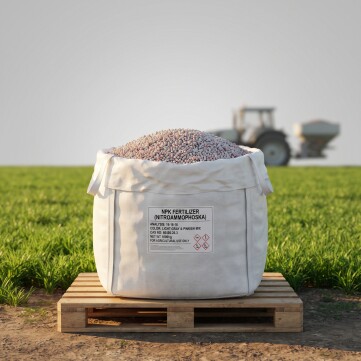
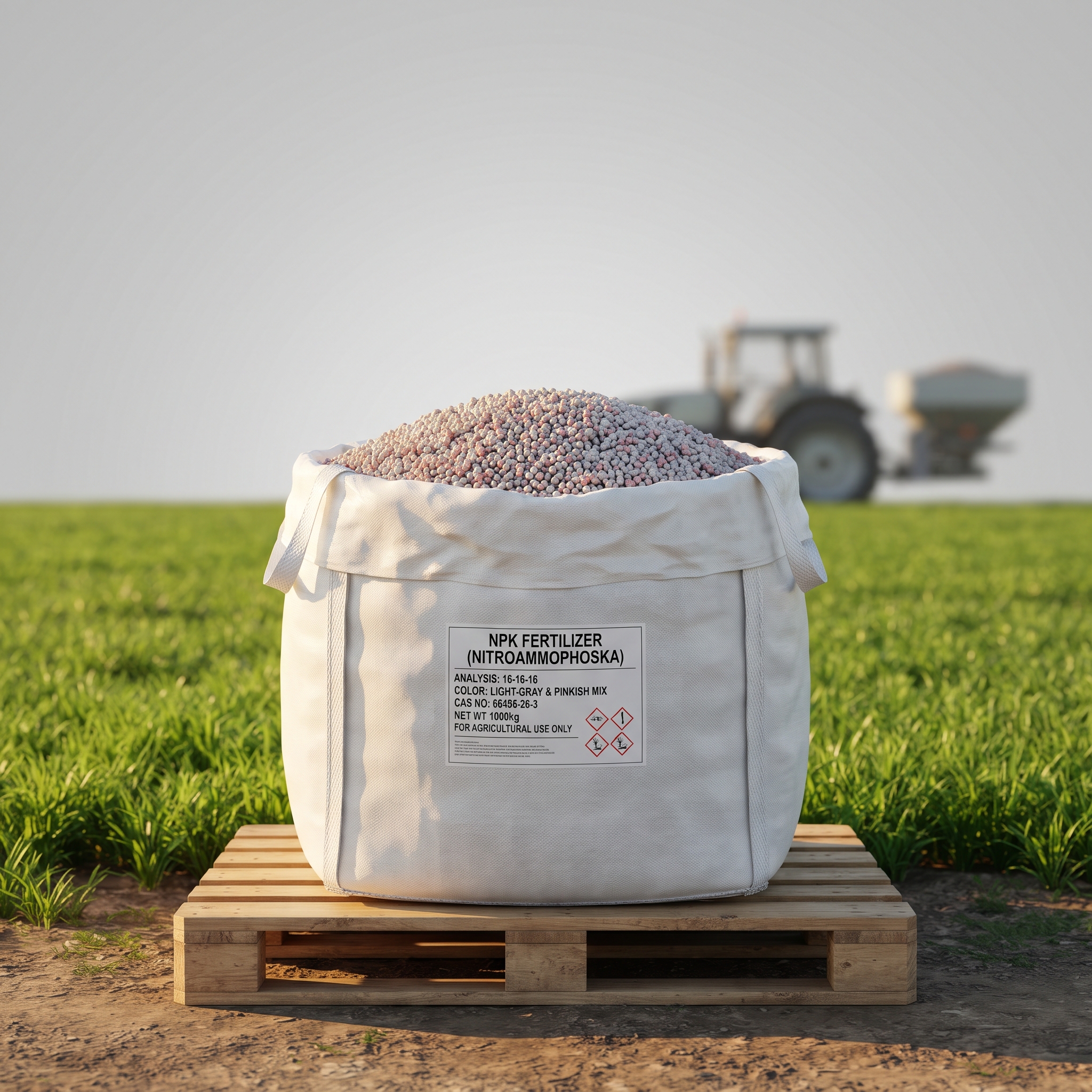
NPK fertilizer consists of light-gray, pink, or beige granules depending on the grade and components used. The total nutrient content (nitrogen, phosphorus calculated as phosphorus oxide, and potassium calculated as potassium oxide) is at least 45-48 percent for various grades. Typical grades include 16:16:16, where nitrogen, phosphorus, and potassium contents are 16 percent each; 13:19:19; 15:15:15; 12:15:15; and others. The water mass fraction does not exceed 1.0-1.5 percent. Granulometric composition: the mass fraction of granules sized 1 to 4 mm is at least 90-95 percent, granules below 1 mm not more than 3-5 percent. Granule static strength is at least 3-5 N per granule, and flowability is 100 percent. NPK fertilizer has good flowability, does not cake under proper storage conditions, and is readily soluble in water, ensuring nutrient availability to plants.
Technical Grades and Supply Forms
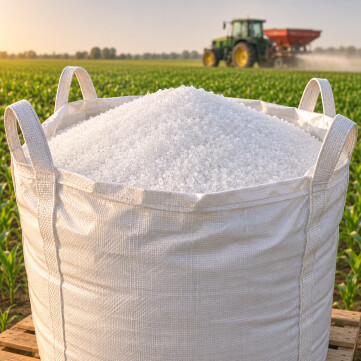
Under GOST 25849-83, NPK fertilizer is produced in several grades differing in the nitrogen, phosphorus, and potassium ratio. The most common grades are 16:16:16, 13:19:19, 15:15:15, and 12:15:15. Depending on the potassium component used, NPK fertilizer may contain chlorine (when potassium chloride is used) or be chlorine-free (when potassium sulfate is used). The product is supplied in bulk in rail cars and road transport, in polypropylene bags of 50 kg, and in big bags of 800 and 1000 kg capacity. Typical agricultural bulk shipments start from one tonne; for large agroholdings and traders, from 20 tonnes and more.
Regulatory Framework
In the EAEU region, quality of NPK fertilizer is governed by GOST 25849-83 Nitroammophoska. Specifications. The standard sets requirements for physicochemical indicators, granulometric composition, packaging, marking, transportation, and storage. The product, as a mineral fertilizer, is subject to conformity declaration under the EAEU technical regulation on requirements for mineral fertilizers, which sets radiation and chemical safety norms. For customs purposes, the explanatory notes to HS heading 3105 apply.
Mechanism of Action and Functional Role
NPK fertilizer supplies plants with three main nutrients simultaneously. Nitrogen in ammonium and nitrate forms is available to plants at different stages of the growing season: nitrate nitrogen is rapidly absorbed, while ammonium nitrogen is retained by the soil complex and used gradually. Phosphorus in water-soluble form participates in energy metabolism, root system development, and the formation of reproductive organs. Potassium regulates water balance, increases plant resistance to stresses, and improves fruit quality. The balanced ratio of elements ensures uniform crop nutrition throughout the growing season without the need for separate application of simple fertilizers.
Applications by Industry
Agriculture is the main consumer of NPK fertilizer. The product is used as a basal fertilizer for all agricultural crops on various soil types, for pre-sowing application, and for top dressing. NPK fertilizer is particularly in demand in the cultivation of cereals, potatoes, vegetables, sugar beet, sunflower, and fruit and berry crops. Application rates range from 200 to 600 kg/ha in physical weight depending on the crop, soil nutrient availability, and planned yield. NPK fertilizer is also used for preparing fertilizer blends at blending plants and on farms. In industry, NPK fertilizer is not widely used, as it is intended primarily for agriculture.
Comparison with Alternative Materials
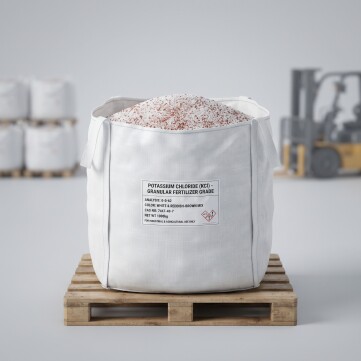
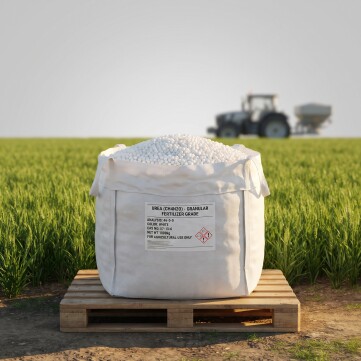
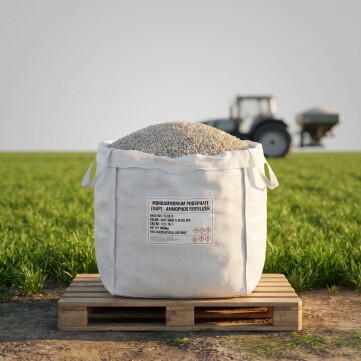
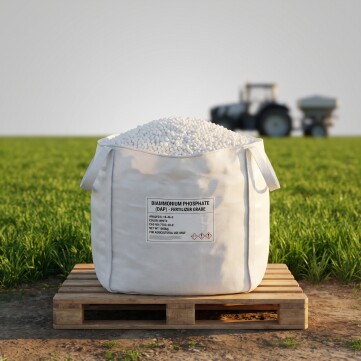
Compared with simple fertilizers (urea, ammophos, potassium chloride), NPK fertilizer reduces the number of applications and provides balanced plant nutrition, although it requires consideration of specific crop needs. Compared with ammophos, NPK fertilizer additionally contains potassium, making it more versatile for basal application. Compared with diammonium phosphate, NPK fertilizer provides a more complete set of macronutrients but is inferior in phosphorus content. The choice between these fertilizers is determined by soil agrochemical parameters and the requirements of the specific crop.
Typical Processing Errors
- Surface application of NPK fertilizer without incorporation into the soil, reducing the efficiency of phosphorus and potassium nutrition.
- Mixing NPK fertilizer with other fertilizers without considering compatibility, which may impair the physical properties of the mixture or cause chemical reactions.
- Storing NPK fertilizer under high humidity without protection from atmospheric precipitation, causing caking and loss of flowability.
- Using NPK fertilizer with impaired granulometric composition (elevated dust fraction) in fertilizer blends, leading to component segregation.
- Applying NPK fertilizer without considering soil nutrient content, leading to inefficient fertilizer use.
- Violating the tightness of big bags or sacks during storage on open platforms, causing product wetting and loss of commercial properties.
Quality Control and Laboratory Methods
Incoming inspection of NPK fertilizer includes determination of appearance and granule color, total nitrogen mass fraction, available phosphate mass fraction calculated as phosphorus oxide, potassium mass fraction calculated as potassium oxide, water mass fraction, granulometric composition, granule static strength, and flowability. Nitrogen content is determined by ammonia distillation after sample decomposition. Phosphorus content is determined by photometric or titrimetric method. Potassium content is determined by flame photometric or titrimetric method. Test methods are governed by GOST 25849-83 and relevant standards for mineral fertilizer analysis.
Storage and Transportation Conditions
NPK fertilizer is stored in closed, dry, clean warehouses excluding atmospheric precipitation and groundwater ingress. Product packaged in big bags or sacks may be stored on pallets or racks ensuring protection from moisture. When storing in bulk, mixing NPK fertilizer with other fertilizers should be avoided. The guaranteed shelf life is typically 6-12 months from the date of manufacture under proper storage conditions. NPK fertilizer is not classified as dangerous goods for transport, simplifying logistics. Transportation is carried out by all modes of transport in accordance with cargo transport rules. In bulk, NPK fertilizer is transported in dedicated self-unloading rail cars, closed deck ships, and road vehicles equipped with a tarpaulin covering the body.
Finding Analogues and Interchangeability
When selecting an analogue for NPK fertilizer, the key criteria are the nitrogen, phosphorus, and potassium ratio, nutrient content, presence or absence of chlorine, granulometric composition, and application. For chlorine-sensitive crops, chlorine-free NPK fertilizer based on potassium sulfate is preferable. For basal application to cereals, replacement with a mixture of simple fertilizers (urea, ammophos, potassium chloride) is possible with dosage adjustment. For fertilizer blend preparation, NPK fertilizer can be partially replaced by other complex fertilizers while maintaining the calculated nutrient content. Direct substitution without consideration of agronomic requirements and soil analysis results is not recommended.
Supply Scheme
For agricultural producers and industrial buyers, NPK fertilizer is available worldwide through the apptrade.ru platform. Shipments can be organized from producing regions across different continents, with logistics and customs support adapted to the destination market. International sourcing allows buyers to balance cost and lead time depending on batch size and logistical distance, especially for bulk sea shipments.
Logistics and Customs Clearance
NPK fertilizer is transported by sea, rail, and road. For large batches, bulk transport in sea vessels or dedicated rail cars is economically viable; for medium and small volumes, big bags and sacks are used. When imported into the EAEU, products are classified under HS heading 3105. As NPK fertilizer is not dangerous goods, special dangerous goods packaging and marking requirements do not apply; however, phytosanitary and sanitary norms must be observed. The portal customs broker prepares declarations, confirms classification codes, and manages non-tariff regulation procedures.
FAQ
What is NPK fertilizer and how does it differ from ammophos?
NPK fertilizer is a complex fertilizer containing three nutrients: nitrogen, phosphorus, and potassium. Ammophos contains only nitrogen and phosphorus. NPK fertilizer provides more complete plant nutrition but requires consideration of the crop needs for each element.
Which NPK grades are most common?
The most common grades are 16:16:16, 13:19:19, 15:15:15, and 12:15:15. The choice of grade is determined by crop needs and soil agrochemical parameters.
Can NPK fertilizer be used for all crops?
Yes, NPK fertilizer is a universal fertilizer for most agricultural crops. However, for chlorine-sensitive crops, chlorine-free grades based on potassium sulfate should be selected.
Is NPK fertilizer classified as dangerous goods for transport?
No, NPK fertilizer is not classified as dangerous goods. It is fire- and explosion-safe under normal conditions and is assigned to hazard class 4 as a low-hazard substance. Special permits and dangerous goods marking are not required.
What is the shelf life of NPK fertilizer?
The guaranteed shelf life of NPK fertilizer is typically 6-12 months from the date of manufacture under storage conditions in closed dry warehouses. After expiry, the product must undergo laboratory testing before use.
Can NPK fertilizer be mixed with other fertilizers?
NPK fertilizer has good physical properties and can be used in fertilizer blends. However, mixing with certain fertilizers requires preliminary compatibility testing to avoid impairing the physical properties of the mixture or causing chemical reactions.
Conclusion
NPK fertilizer remains one of the most in-demand complex fertilizers due to its balanced nitrogen, phosphorus, and potassium content, good physical and mechanical properties, and versatility of application. For agro-industrial buyers, critical factors include batch-to-batch consistency, especially nutrient ratio and granulometry, correct customs classification, and compliance with storage conditions to preserve flowability. The apptrade.ru portal organizes the full supply cycle, from grade selection for a specific crop and soil condition to customs clearance and delivery to the manufacturing site.
Contact Us
For procurement inquiries, technical documentation, and logistics coordination, contact the apptrade.ru team at info@apptrade.ru.