Naphtha and White Spirit
Petroleum Solvents: Naphtha and White Spirit for Industrial B2B Supply
Petroleum solvents are complex hydrocarbon mixtures obtained through straight-run distillation or catalytic reforming of crude oil fractions. In industrial procurement, two product families dominate: naphtha solvents and white spirit. These materials serve essential functions across coatings, rubber, metalworking, and adjacent sectors. Their primary role is to dissolve film-forming substances, degrease surfaces, and reduce viscosity of formulations without altering the target properties of the final product.
Chemical Identification
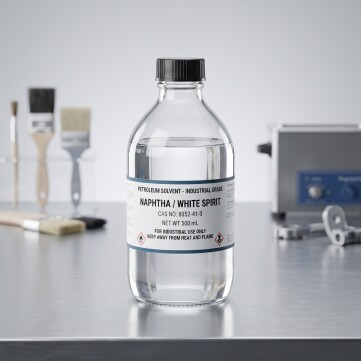
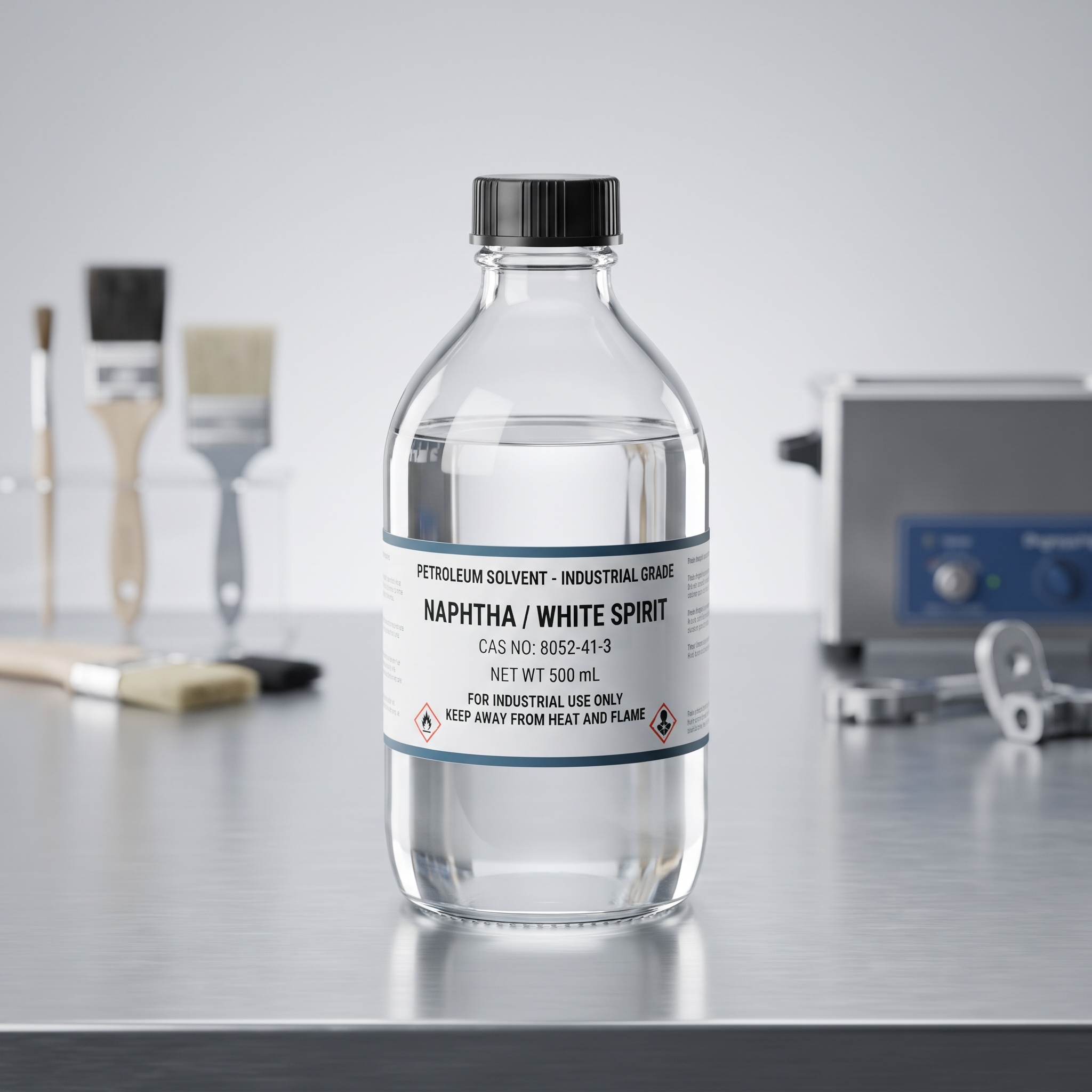
Naphtha and white spirit are not single chemical compounds. They are multicomponent mixtures of aliphatic, naphthenic, and aromatic hydrocarbons with specified boiling ranges. White spirit, corresponding to naphtha S4-155/200 in the GOST system, is identified by CAS 8052-41-3 (Stoddard solvent) or 64742-88-7 for hydrodesulfurized heavy naphtha. Naphtha S2-80/120, a low-boiling rubber-grade solvent, does not have a single CAS number because it is defined by its distillation range. In international trade, petroleum solvents are classified under HS heading 2710 as petroleum products derived from bituminous minerals, with specification based on boiling range and density.
Physicochemical Properties
Properties are governed by fractional composition. White spirit under GOST 3134-78 has a density at 20 degrees Celsius not exceeding 0.790 g/cm3, an initial boiling point not above 160 degrees Celsius, a flash point in a closed cup not below 33 degrees Celsius, and an aromatic hydrocarbon content not exceeding 16 percent. Naphtha S2-80/120 has a lower density (not above 0.700-0.730 g/cm3 depending on grade) and an initial boiling point not below 80 degrees Celsius. Both products are practically insoluble in water and miscible with most organic solvents and oils.
Technical Grades and Supply Forms
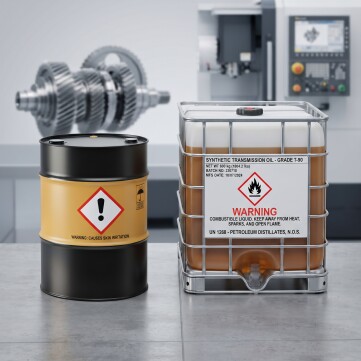
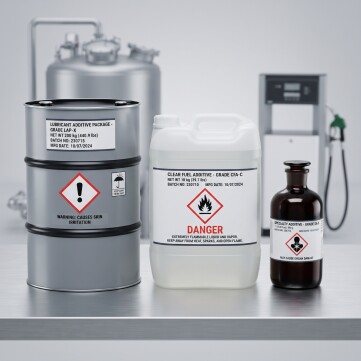
Naphtha is produced in several grades distinguished by boiling ranges. The most common are naphtha S2-80/120 for rubber and degreasing applications and naphtha S4-155/200, equivalent to white spirit. White spirit is supplied in steel drums for bulk B2B orders and in smaller packaging for laboratory or retail use. Typical B2B shipments start from one tonne in intermediate bulk containers or dedicated tankers.
Regulatory Framework
In the EAEU region, quality is governed by state standards: white spirit under GOST 3134-78, naphthas S2-80/120 and S3-80/120 under GOST 443-76, and naphtha S50/170 under GOST 8505-80. Export-oriented shipments may be accompanied by test reports referencing ASTM D86 for distillation and ASTM D93 for flash point. For customs purposes, the explanatory notes to HS heading 2710 apply.
Mechanism of Action and Functional Role
A solvent performs two primary functions. First, it physically dissolves the film-forming agent (alkyd, oil, or bitumen resins) by penetrating between polymer macromolecules and disrupting intermolecular bonds. Second, it adjusts rheological properties, reducing viscosity for spray, brush, or dip application. After application, the solvent evaporates at a controlled rate without chemically reacting with the film former. Evaporation rate and solvency power, expressed through the aniline point or solubility parameter, are the key technological characteristics.
Applications by Industry
The coatings industry consumes the largest share of white spirit as a thinner for oil-based paints, alkyd enamels, varnishes, and drying oils, and in wood protection formulations. Naphtha S2-80/120 is used in the rubber industry as a solvent for adhesives and cements, in rubber article manufacturing, and for degreasing metal, fabric, and leather surfaces before painting or bonding. In mechanical engineering, naphtha is employed for flushing components and removing preservative coatings. The textile and optical industries use light naphthas for cleaning optics and preparing fabrics. In construction, white spirit is added to bitumen primers and mastics to reduce viscosity.
Comparison with Alternative Materials
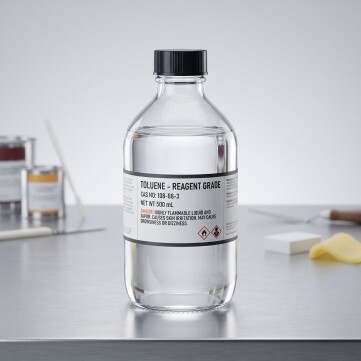
Compared with aromatic solvents such as xylene, toluene, or solvent naphtha, petroleum solvents offer lower toxicity and milder skin effects but may be less effective for certain resins. White spirit evaporates more slowly than acetone or ethyl acetate, reducing the risk of film defects at elevated drying temperatures but extending drying time. Naphtha S2-80/120, being more volatile, enables faster drying but requires stricter ventilation control in the workplace. The choice between them is determined by the balance between process speed and safety.
Typical Processing Errors
- Using a solvent with elevated aromatic content for coatings sensitive to aromatic swelling, causing film wrinkling.
- Applying white spirit in unventilated enclosed spaces without respiratory protection.
- Mixing spent solvent with acids or oxidizers, which may cause an exothermic reaction.
- Storing drums under direct sunlight or near heat sources, leading to pressure buildup in containers.
- Using solvent past its shelf life without prior laboratory verification of fractional composition.
Quality Control and Laboratory Methods
Incoming inspection of petroleum solvents at a manufacturing site includes determination of density (hydrometer or pycnometer), fractional composition (distillation under GOST 2177 or ASTM D86), flash point in a closed cup (GOST 6356), aniline point (GOST 12329), and total sulfur content. For white spirit, a copper strip corrosion test is additionally performed to assess corrosive activity. Aromatic hydrocarbon content may be determined chromatographically, particularly for critical coating formulations.
Storage and Transportation Conditions
Naphtha and white spirit are flammable liquids. The closed-cup flash point of white spirit is not below 33 degrees Celsius, corresponding to hazard class 3 under GOST 12.1.007. Storage is in sealed containers in ventilated warehouses, protected from direct sunlight and kept away from oxidizers, acids, and ignition sources. The guaranteed shelf life of white spirit under GOST 3134-78 is three years from the date of manufacture. Transportation is possible by all modes of transport in compliance with dangerous goods regulations; road transport follows ADR requirements (class 3, UN 1268).
Finding Analogues and Interchangeability
When selecting an analogue for naphtha or white spirit, the key criteria are boiling range, density, aromatic content, and flash point. A product with a broader fraction may alter coating drying speed; a product with higher aromatic content may increase solvency but raise toxicity and the risk of film defects. For rubber formulations, volatility is critical; for coatings, the aniline point and resistance to crater formation are decisive. Substituting one solvent class for another without reformulation is not recommended without preliminary testing.
Supply Scheme
For industrial buyers, naphtha and white spirit are available worldwide through the apptrade.ru platform. Shipments can be organized from producing regions across different continents, with logistics and customs support adapted to the destination market. International sourcing allows buyers to balance cost and lead time depending on batch size and logistical distance.
Logistics and Customs Clearance
Petroleum solvents are transported by sea, rail, and road. For large batches, sea tank containers or dedicated tankers are economically viable; for medium and small volumes, intermediate bulk containers and steel drums are used. When imported into the EAEU, products are classified under HS heading 2710, requiring accurate description of fractional composition and density in shipping documents. The portal customs broker prepares declarations, confirms classification codes, and manages non-tariff regulation procedures where applicable to a specific shipment.
FAQ
What is the difference between white spirit and naphtha S2-80/120?
White spirit is a heavier fraction with a boiling range of 155-200 degrees Celsius and a flash point not below 33 degrees Celsius. Naphtha S2-80/120 boils in the 80-120 degrees Celsius range, is more volatile, and is used primarily in the rubber industry and for rapid degreasing.
Can white spirit be used to thin waterborne paints?
No. White spirit is incompatible with aqueous systems and may cause dispersion coagulation. It is intended for solvent-borne materials.
What hazard class is assigned to petroleum solvents?
White spirit and naphtha are classified as hazard class 3 for health effects (moderately hazardous) and class 3 for transport (flammable liquids).
How long can naphtha and white spirit be stored?
The guaranteed shelf life of white spirit under GOST is three years. After expiry, the product must undergo laboratory testing before use.
Is special packaging required for transportation?
Yes. For class 3 dangerous goods, packaging must withstand internal pressure and comply with ADR requirements. Hazard labels are applied in accordance with GOST 19433.
What is the difference between naphtha S50/170 and white spirit?
Naphtha S50/170 has a broader and higher-temperature distillation range and is used mainly as a solvent for specialty coatings, whereas white spirit is standardized to a narrower range.
Conclusion
Naphtha and white spirit remain foundational solvents for multiple industries due to their predictable fractional composition, availability, and established regulatory framework. For B2B buyers, critical factors extend beyond price per tonne to include batch-to-batch consistency, correct customs classification, and compliance with dangerous goods transport rules. The apptrade.ru portal organizes the full supply cycle, from grade selection for a specific process to customs clearance and delivery to the manufacturing site.
Contact Us
For procurement inquiries, technical documentation, and logistics coordination, contact the apptrade.ru team at info@apptrade.ru.